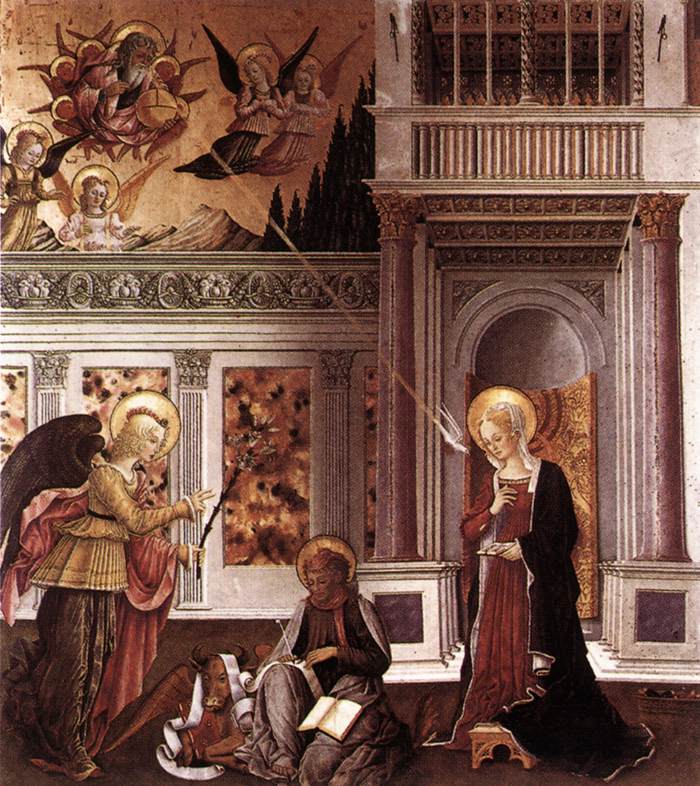
October 4th is the feast day of St. Francis of Assisi. To celebrate the day we would like to recount two obscure stories about St. Clare and St. Francis while they were still in the womb or about to be born.
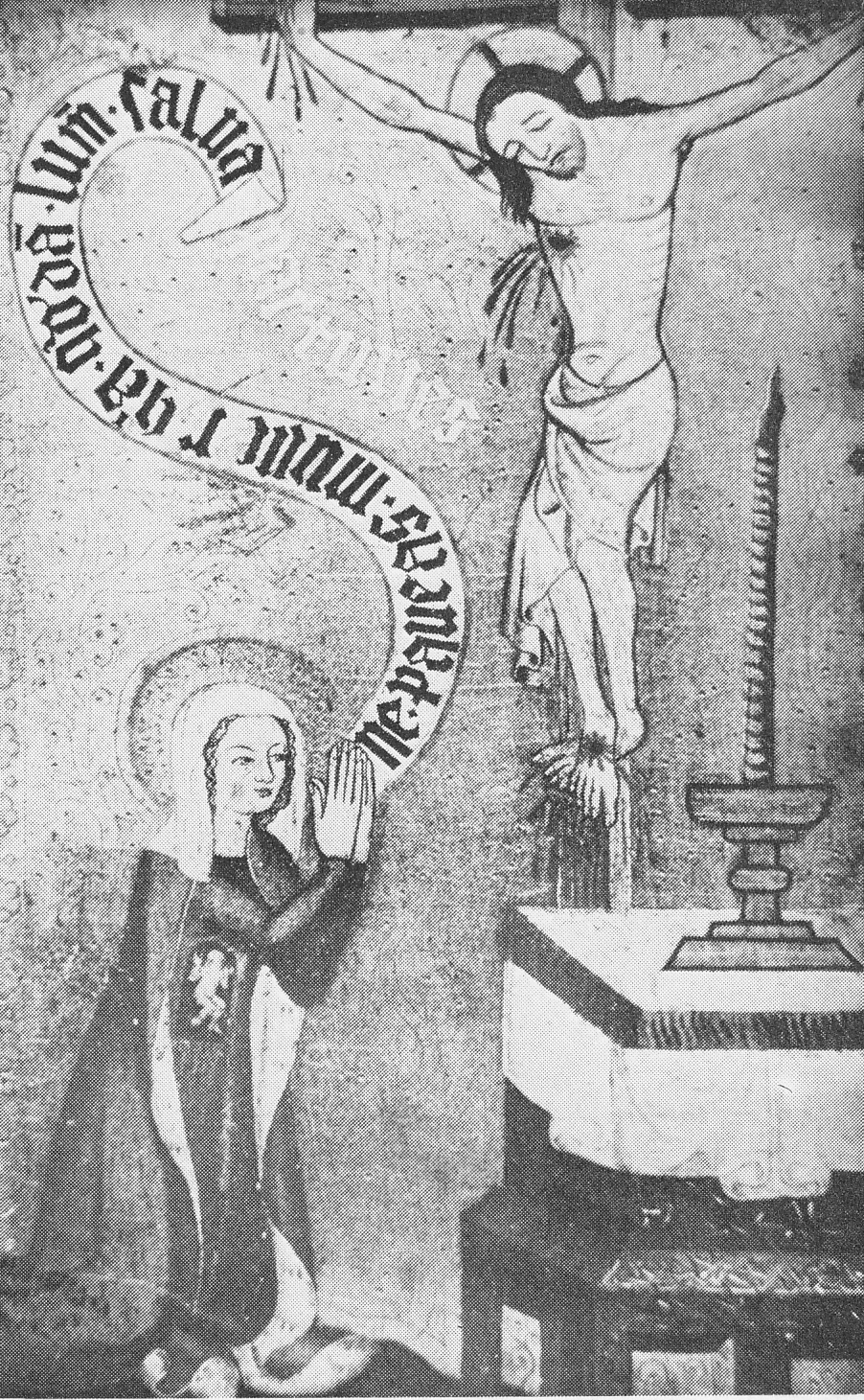
Hortulana, St. Clare’s Mother Praying for a Safe Delivery.
Note unborn Clare
It is said that St. Clare received the name Clare, which means clear or bright, for the following reason. While her mother Hortulana, was kneeling before a crucifix, praying that God might aid her in her hour of delivery, she heard the words : ” Do not fear. You will give birth to a light which shall illumine the whole world.”
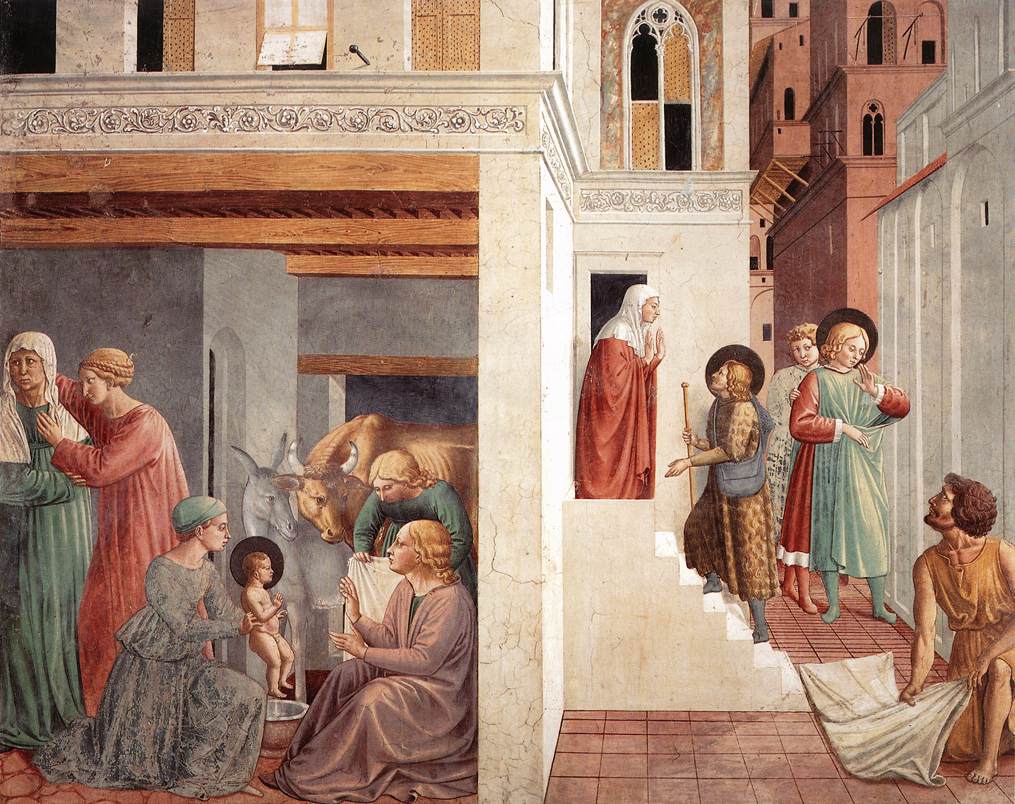
There is a legend about the birth of St. Francis. Lady Pica, (his mother) was finding her labor to be particularly difficult. Her husband was abroad in France on one of his business trips, and she was at home with only her household staff in attendance. Whether it was her idea, or another’s, the thought came that perhaps a walk would be good, and so she set out a short distance to the nearby stable. Apparently it did the trick. The baby Francis hastened his entrance into the world, and ended up being born in the stable.
Respect Life Sunday – October 3, 2010
Topics addressed in this year’s Respect Life Program reflect a diversity of pro-life concerns (we have added links to some excellent pamphlets/bulletin inserts from the Respect Life Program):
- the death penalty and Divine Mercy
- end-of-life care Caring for Each Other, Even Unto Death by Marie Hillard
- infertility treatments in line with Church teaching Hope for Married Couples Who Want to Have a Child by John T. Bruchalski, MD, FACOG
- sexual trafficking
- population control Make Room for People by Steven W. Mosher
- depression and suicide among youth
- the promise of pro-life youth The Promise of Pro-Life Youth by Megan Breen and Samuel Vasquez
Here are two links to the USCCB website that give complete details on the Respect Life Program.
Click here for an overview of the program and here for materials that can be downloaded.
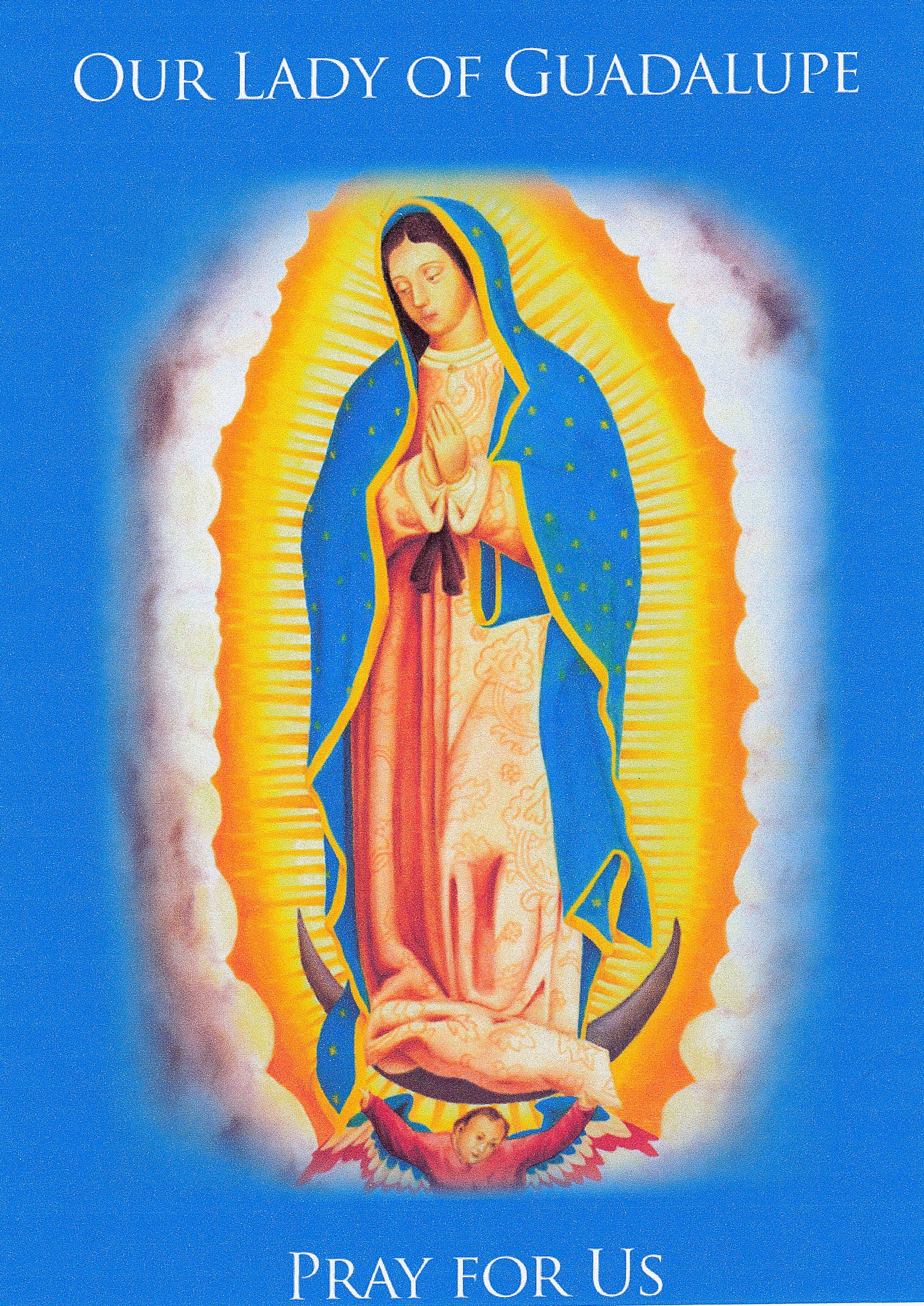
What I find especially interesting about this year’s program is the emphasis on Our Lady of Guadalupe in the 2010 – 2011 Respect Life Program Liturgy Guide.
Page 10 of the Liturgy Guide is about the Miraculous Apparitions of Our Lady of Guadalupe. The following is a quote from this article:
“Our Lady of Guadalupe has been honored by twenty-five popes. She has been formally declared Patroness and Mother of the Americas. Informally, she is honored as Patroness of Unborn Children because she appeared to Juan Diego as a pregnant woman and, in the seven years after the apparitions, approximately eight million Aztec people converted to Catholicism, and abandoned a culture of death that had practiced human sacrifice, including infant sacrifice.”
There is also a beautiful nine day Novena to Our Lady of Guadalupe in the Liturgy Guide. Day 3 has a short reflection on Our Lady’s Pregnancy.
Day Three
Mother of God, your ribboned sash identified you as a pregnant woman, a woman who bore the Christ Child to a world in darkness and who through two millennia has borne the light and love of Christ to a world that has largely rejected Him. May the love of your Son awaken a hymn of thanksgiving and praise in all pregnant mothers,as happened long ago in the home of Elizabeth and Zechariah.
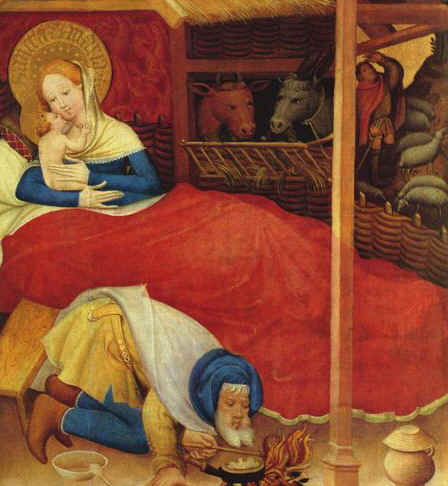
Birth of Christ: St. Denis Basilica, Paris
“I came to cast fire upon the earth; and would that it were already kindled!” Luke 12:49
Filed under: Unborn Jesus
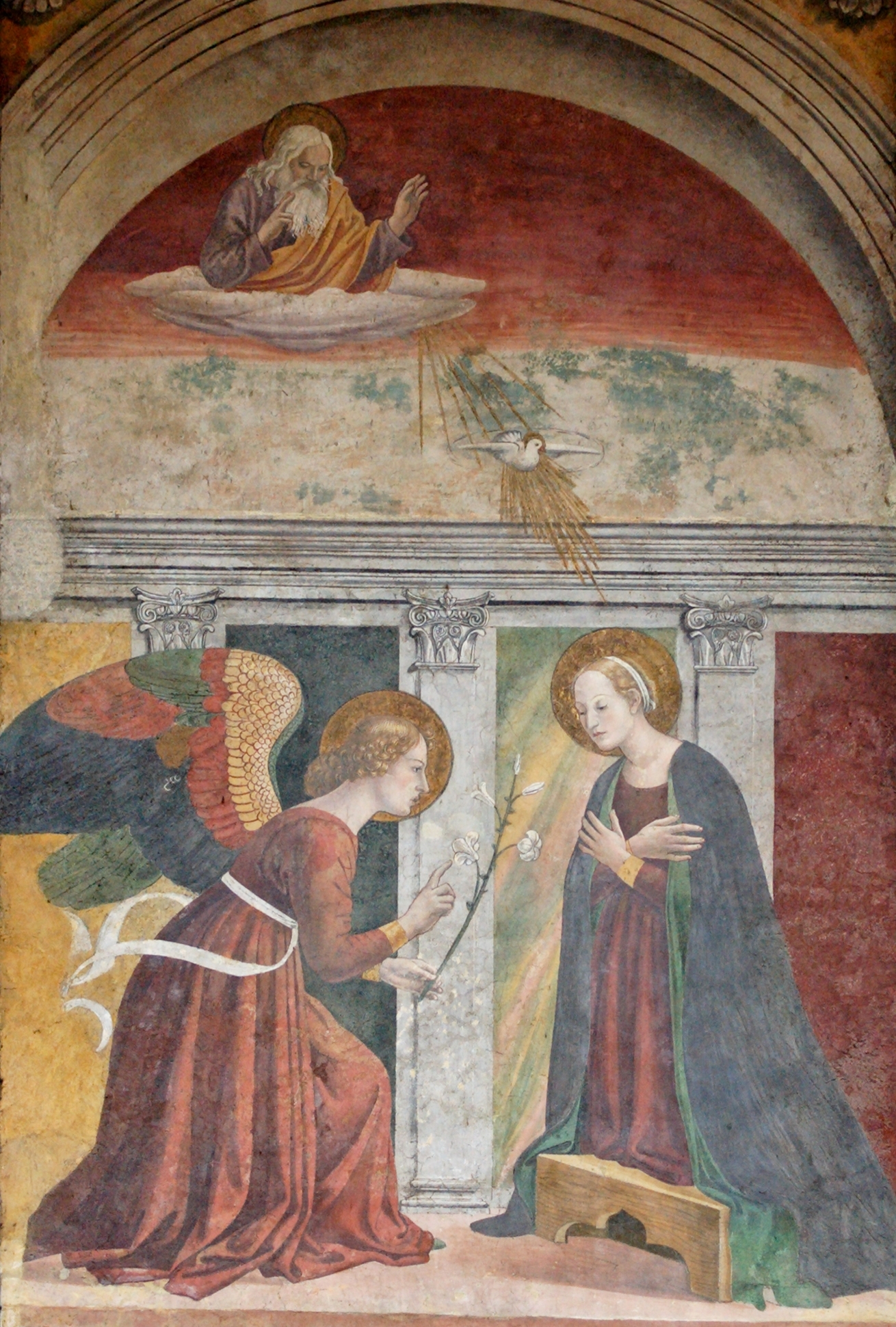
The following is a quote from Pope John Paul II.
“The first part of the Hail Mary, drawn from the words spoken to Mary by the Angel Gabriel and by Saint Elizabeth, is a contemplation in adoration of the mystery accomplished in the Virgin of Nazareth.
These words express, so to speak, the wonder of heaven and earth; they could be said to give us a glimpse of God’s own wonderment as he contemplates his “masterpiece” – the Incarnation of the Son in the womb of the Virgin Mary.
If we recall how, in the Book of Genesis, God “saw all that he had made” (Gen 1:31), we can find here an echo of that “pathos with which God, at the dawn of creation, looked upon the work of his hands”.
The repetition of the Hail Mary in the Rosary gives us a share in God’s own wonder and pleasure: in jubilant amazement we acknowledge the greatest miracle of history. “
Apostolic Letter of John Paul II, Rosarium Virginis Mariae , # 33
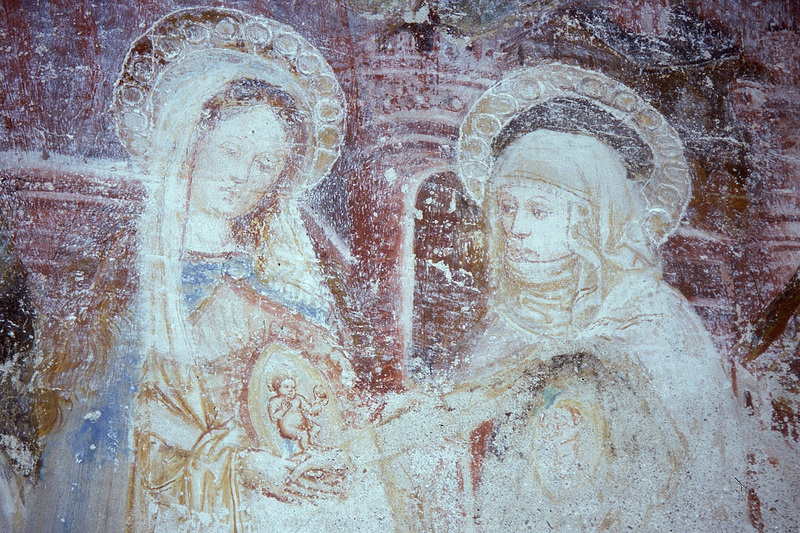
The Church celebrates three New Testament era pregnancies in her ancient Church calendar:
Mary: Her Conception – December 8th (The Immaculate Conception of Mary) Her Nativity – September 8th (nine months later)
John the Baptist: (His Gestation – May 31st; The Visitation) His Birth – June 24th
Jesus: His Conception – March 25th (The Annunciation) (His Gestation – May 31st; The Visitation) His Nativity – December 25th (Christmas; nine months later)
The dates are in large part symbolic, though marking actual historical events. We include here the feast day of the Visitation (twice) inasmuch as this feast day encapsulates many profound aspects of these two pregnancies; the two mothers and the two unborn/preborn babies. The Church even has two seasons honoring the pregnancy and birth of Jesus; Advent and Christmastide. Then, to top the whole pregnancy perspective off, there is even a feast day to celebrate ‘Mary Mother of God’ (January 1st). Taken together, these are Culture of Life days of celebration! (Note: Joseph’s fatherhood is also celebrated March 19th and Feast of the Holy Family; Sunday after Christmas.)
Capturing the sentiment in his Encyclical Letter on the Holy Spirit, Pope John Paul the Great says: “The conception and birth of Jesus Christ are in fact the greatest work accomplished by the Holy Spirit in the history of creation and salvation: the supreme grace – ‘the grace of union,’ source of every other grace, as St. Thomas explains.”
And yet, amidst all of this wondrous celebration and joy, there is the little matter of December 28th – the feast of The Holy Innocents….during which, in our modern time of Herodian vices run amok, we sadly recall the Gospel story of infant male massacre along with our present day horror of unborn male and female massacre.
In the spirit of the hidden (unborn) Infancy Gospel, in harmony with the above teaching of John Paul the Great, in the legacy of the Gospel of Life Encyclical, and in solidarity with all unborn children who have died or are at risk, we propose one more feast day relating to the pregnancy of Mary: a feast day of The Unborn Christ Child!
A Feast Day acknowledging boldly that Jesus Christ was a beautiful unborn baby – like other unborn babies – that the Unborn Christ Child is in complete solidarity with all unborn children as He fulfills the Will of God within the womb of His Mother, and that God loves all unborn children. A feast day of Hope and Expectation, honoring pregnant Mothers who, like Mary, strive to follow the Will of God with heroic virtue.
Let us know if you agree, and please share this idea with others!
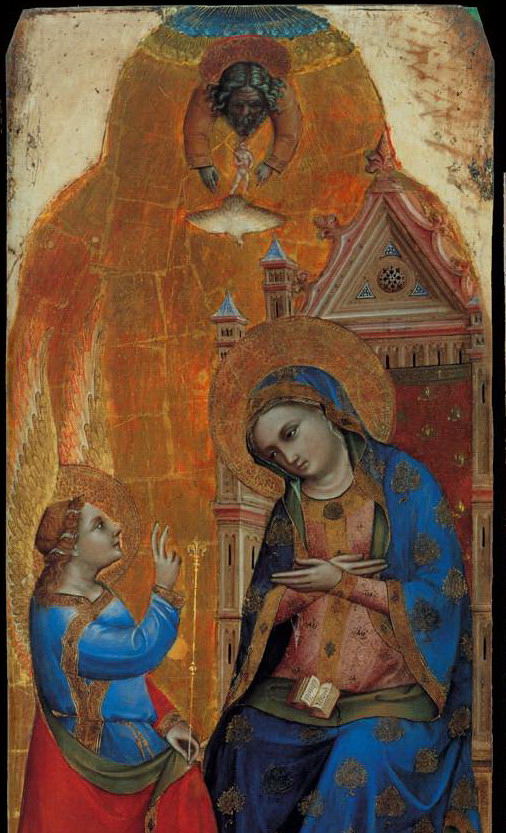
Two human beings are mentioned by name in the ancient Christian Creed so as to anchor our Christian beliefs in actual historical circumstances: “the Virgin Mary” and “Pontius Pilate”. The one mentioned in appreciation the other in depreciation. John the Baptist is not mentioned in the Creed, nor Joseph, nor Peter, nor Paul, nor the four evangelists.
“For us men and for our salvation he came down from heaven: by the power of the Holy Spirit he was born of the Virgin Mary, and became man.
For our sake he was crucified under Pontius Pilate; he suffered, died, and was buried.”
“For us men”, “for our salvation” and “For our sake” are three critical phrases which give perspective about why God came into our world and did what He did. (Recall the famous verse John 3:16 ; “For God so loved the world that he gave his only Son…”)
The fantastic thing about this marvelous plan of salvation is that God did it “for you” and “for me” personally. But first, He did it for Mary! “…by the power of the Holy Spirit he was born of the Virgin Mary, and became man”. At the very instant of the conception of Jesus Christ, Mary loved Him on your behalf. She loved Him with all of her being on your behalf, to say thank you on your behalf. She accepted Him with an inspired maternal love not only as Mother, but also on behalf of her other children (see Rev 12:17).
Let’s consider how blessed we are that Mary completely accepted Him and profoundly loved Him throughout her nine month pregnancy and thereafter, by recalling these words from the Prologue to John’s Gospel: “He was in the world, and the world was made through him, yet the world knew him not. He came to his own home, and his own people received him not. But to all who received him, who believed in his name, he gave power to become children of God…” (Jn 1:10-12). Mary “received him” and she “believed in his name”. She was first among the “children of God”, but as His Mother, our mother too.
Through Mary, Christ “became man” – one of us, one with us. She immediately embraced Him with all of her love and thereby made the Incarnation of the Son of God an even more wonderful miracle because as a Sign of God’s Love it is accompanied by the best of our human love. God poured His Grace upon humanity in His Incarnation and humanity ( Mary) poured her affection and gratitude upon God! This is the way it should have been, this is the way it was. Sinful humanity (Herod) wanted a different outcome but Love prevailed – thanks be to God! (And thanks also to “the Virgin Mary”.)
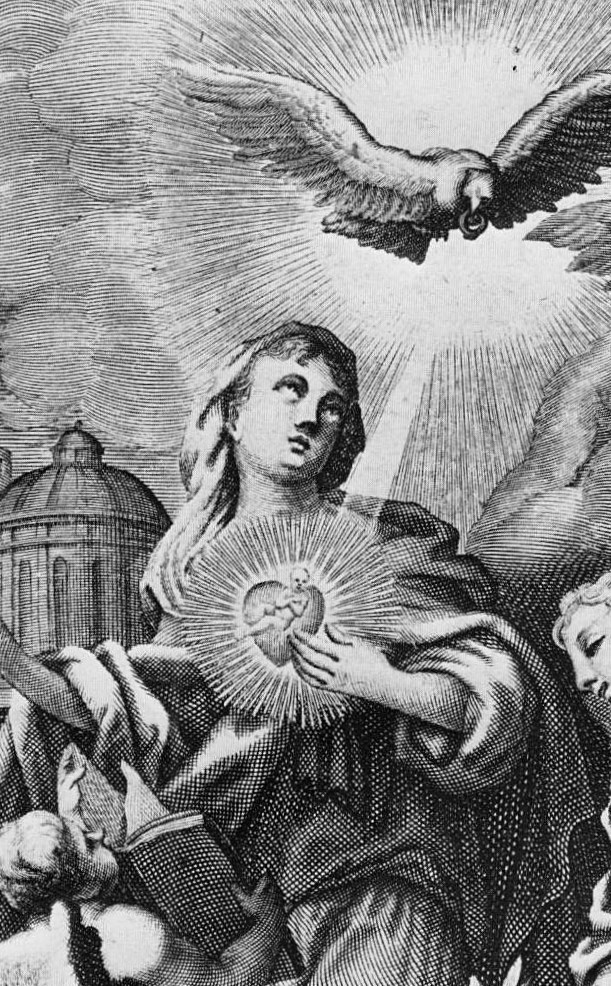
Annunciation by Michael Wening
Christians of every persuasion unite around the repetition of the Our Father. But in a sense the Lord’s Prayer is a model of how to pray – not the only prayer we are to say.
Making the sign of the cross is a physical expression of prayer which reflects our interior disposition (at least to an extent). Kneeling is also a physical expression of prayer but less revealing of one’s “beliefs” than making the sign of the cross.
All of our spiritual acts and words leave an impression upon our souls. The memory is a faculty of the soul, an “inner sense” as Aquinas described it. Surely the memory takes note of all our spiritual acts and prayers, especially those that tend to be repetitive.
So let’s consider briefly just a few words from one prayer; the Hail Mary, which is a prayer based on scripture and the tradition of the Church. (The first half of the Hail Mary comes straight from scripture; Lk 1:28, 42, 31. The second half is a simple petition expressing the age old mind of the Church.) Let’s consider one clause from this ancient prayer of the Church: “…blessed is the fruit of thy womb Jesus”. These words were spoken by Elizabeth to Mary when Unborn Jesus was about one week old – He was in Mary’s womb when the words were spoken by Elizabeth who was probably just a few feet away from Him.
“Blessed is the fruit of thy womb Jesus”. These words have been prayed by Catholics zillions of times over two thousand years, but more to the point, each individual Catholic has heard these words over and over again and prayed these words over and over again. The message of these words is like a radiant beam of glory aimed at the heart of the Christian. The point here is that these words are packed with message and meaning.
Some would take issue with recitation of this prayer by quoting Jesus Himself: “And in praying do not heap up empty phrases as the Gentiles do…” (Mt 6:7). The point here is that this phrase – this glorious phrase “Blessed is the fruit of thy womb Jesus” – is NOT an empty phrase, it is scripture, it is a phrase “pressed down, and shaken together, and running over” – bursting and overflowing with meaning, direction and hope.
So, the Church is guilty of being fixated upon, even obsessed with, the wonder, the beauty and the glory of the Incarnation of Jesus Christ. And we haven’t even mentioned Christmas yet!
“Blessed is the fruit of your womb Jesus” has been a luminous track for the faithful, lo’ these many centuries, for the illiterate and literate alike, for the weak and the holy alike. These words have upheld a Truth about Jesus Christ which has led the Church into its profound and expansive Pro – Life position concerning all other unborn children in the wombs of their mothers.
Dare we say it? “Blessed is the fruit of every mother’s womb!”
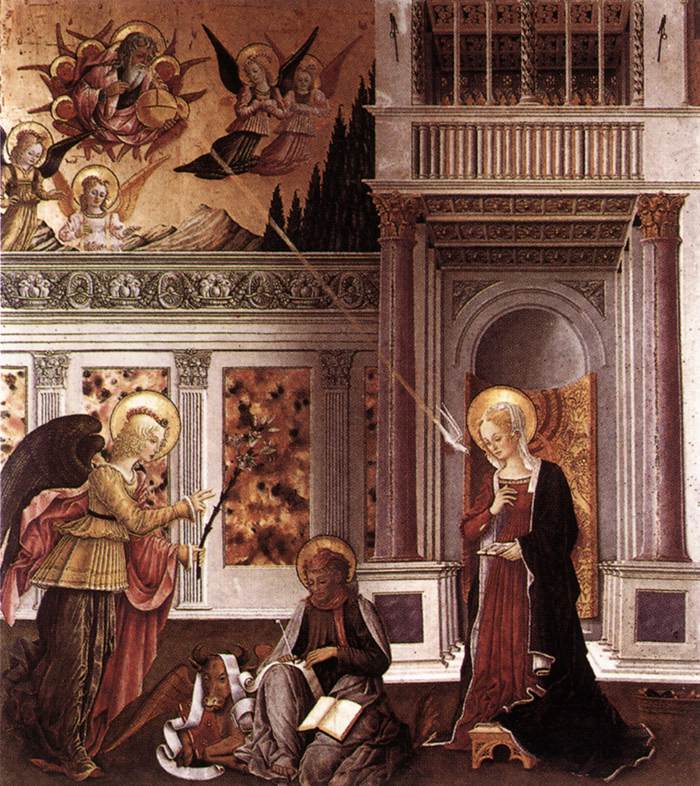
Bonfigli’s Annunciation with St Luke taking notes…
75 verses in the first chapter of Luke’s Gospel detail the nine month pregnancy of Elizabeth and the happy birth of her son John (later to be known as ‘the Baptist’). Plus two angelic visitations, the Incarnation of the Son of God, the fulfillment of Messianic prophecy, two inspired canticles (still repeated daily by the Church) and – if that were not enough – a sublime miracle of the first order performed by none other than the Embryonic Christ Child! What a chapter!
When was the last time you visited this first chapter of the Gospel of Jesus Christ? It behooves every Christian to know it well. Pregnancy is best understood – with all due respect to the dignified practice of Obstetrics and Gynecology – first and foremost as a sacred mystery in the ever unfolding litany of the creative acts of our Loving God. Today pregnancy has become “a hot potato”, “a political football” because a jaded class of sophisticates believe that ending a life in the womb is better than engendering love within the heart. Our world today – and the Church today – need (more than ever) the first chapter of the Gospel of Jesus Christ, written they say, by a doctor…
Chapter Two is just as good if not better – it leaves you on your knees worshipping a little newborn Baby!
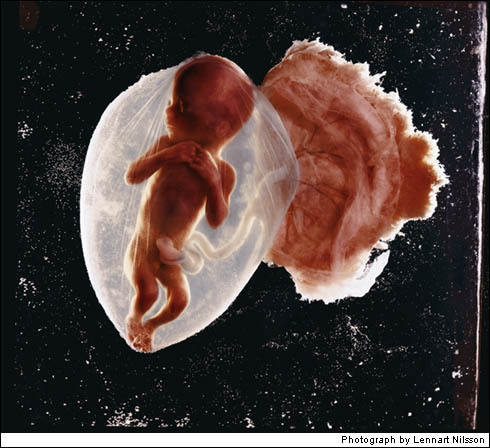
The beginning of life, like the end of life, is shrouded in mystery. The human person at each end of this spectrum is drawn into it, turned about within it, slowly compelled to stare at it. Life’s full blown mystery beckons…..
Gen 3:19 “…till you return to the ground, for out of it you were taken; you are dust, and to dust you shall return.”
Eccl 12:7 “…and the dust returns to the earth as it was, and the spirit returns to God who gave it.”
Job 1:21 “Naked I came from my mother’s womb, and naked shall I return; the Lord gave, and the Lord has taken away; blessed be the name of the Lord.”
Mystery begs contemplation! And the unborn child is immersed in mystery… for in the dust, the human spirit, the nakedness, and yes in the “beckoning” – there is mystery abundant.
Compounding the metaphysical mystery of the unborn child’s life is the existential mystery of his/her passage through a nine month journey of incipiency, a phenomenal rapid growing unparalleled by any other human experience. Throughout this developing awesome growth the unborn child tastes, hears, sees, touches – and then even dreams of these experiences, and in a primitive self-reflective manner – ponders or wonders….
Psalm 139:13-16 “For thou didst form my inward parts, thou didst knit me together in my mother’s womb…. Thou knowest me right well; my frame was not hidden from thee, when I was being made in secret, intricately wrought in the depths of the earth. Thy eyes beheld my unformed substance; in thy book were written, every one of them, the days that were formed for me, when as yet there were none of them.”
In a sense, an unknown yearning sense, the unborn child longs for “the days that were formed for (this child)”…”every one of them”… This is more than a mere instinct for survival – this is the holy Will of his/her Creator that beckons the unborn child onward. A primordial hope welling up within the unborn child’s maturing heart as it timidly images the Great Heart of God.
Birth! The newborn scrambles onto the human stage post haste. Humanity, Beauty and Creation embrace the child! Within the newborn heart the engine of Hope draws the child from disorientation to expectation! And from without, human Love carries this newborn contemplative through the mystery of those early days…!
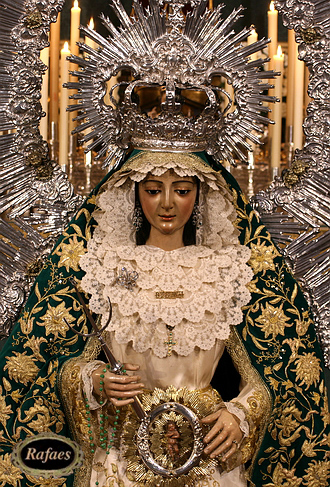
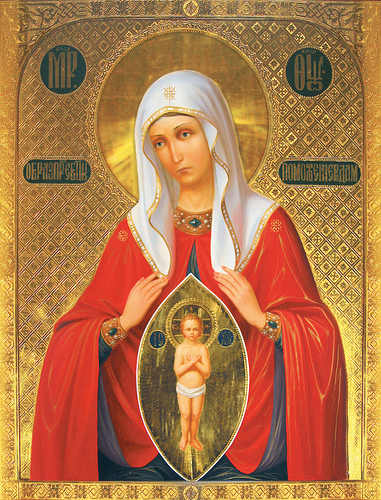
Our Lady de la Esperanza. Our Lady of Divine Hope.
Iglesia de San Martín.. Sevilla. Photo: Rafael Marquez
Towards the end of the Bible that now famous “great multitude in heaven” cry out, with what might be called in the news media a ‘sound bite’: “Salvation and glory and power belong to our God…” (Rev 19:1). This is a most poignant triple touchstone for understanding God. Given the focus of this blog, we will briefly consider how the Archangel Gabriel touches upon these three aspects of Mary’s Son when he announces to her the fast-approaching Incarnation of the Son of God. We will look at ‘glory’ and ‘power’ first then conclude with ‘salvation’. Gabriel tells Mary that her son:
- “will be great”
- “will be called the Son of the Most High”
- He will have given to him “the throne of his father David”
- “he will reign over the house of Jacob for ever”
- “there will be no end” to “his kingdom”
- “the child to be born will be called holy, the Son of God”
We see repeated references and implications here to Jesus the Son of God being filled with glory and power, exercising unending and unlimited power, and manifesting His glory and the glory of His Father.
But what does Gabriel say about “salvation”? Before all of these other titles and expressions of power and glory, Gabriel says: “…you shall call his name Jesus”. The name ‘Jesus’ means: “Yahweh is salvation”. So the first title from the angelic lips of Gabriel – the name of her son – points directly to the salvific life and mission of the son Mary would bear.
This saving power that the Son of God was bringing into our world was attested to by angels in association with each trimester of Mary’s pregnancy. At the immediate beginning of the first trimester Gabriel makes his annunciation to Mary (Lk 1:30-35). Around the second trimester the angel of the Lord tells Joseph in a dream: “…you shall call his name Jesus, for he will save his people from their sins” (Mt 1:21). And immediately following the third trimester, an angel of the Lord appeared in the Bethlehem sky to the shepherds and told them: “…to you is born this day in the city of David, a Savior, who is Christ the Lord” (Lk 2:11).
So we can say with great thanksgiving, paraphrasing Rev 19:1 – “Salvation and glory and power belong to our God… and even to unborn baby Jesus”.
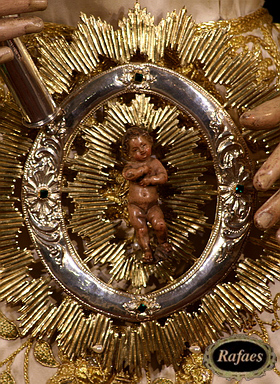
Representation of the Child Jesus in the womb of Our Lady of Divine Hope. Photo: Rafael Marquez
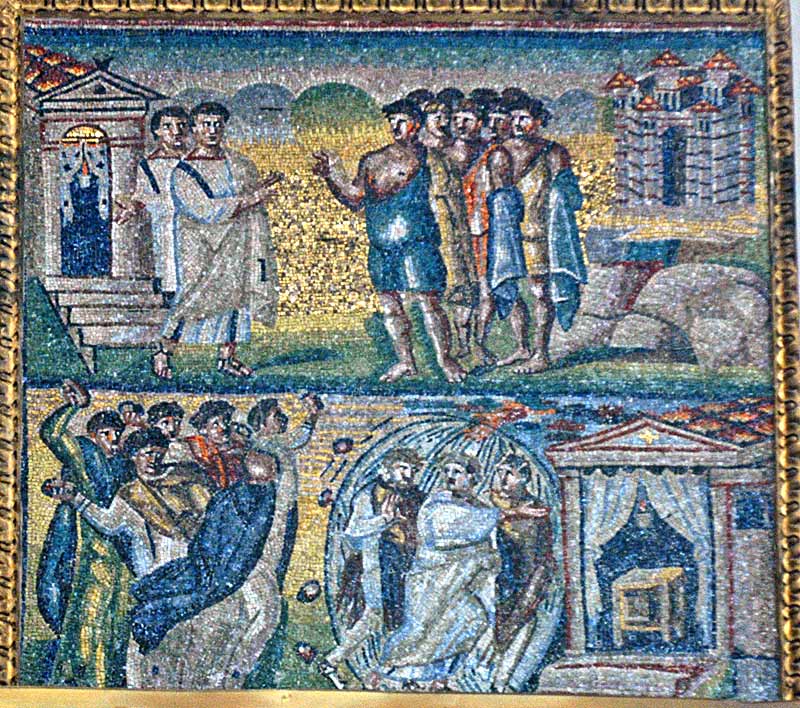
In Numbers 13 the Lord instructed Moses to send spies into the land of Canaan to scope out the land and the people and the various fortifications around their cities. The spies went into Canaan and spent forty days there as the eyes of the Lord. They returned, but most of them were weak in their faith and gave pessimistic anxious reports of what they saw. Joshua and Caleb however, were true faith-filled spies and saw things more optimistically – they had a more inspired interpretation of the land, its inhabitants and God’s designs for Canaan and the chosen people.
Eyes, apparently are not enough to see clearly. The eyes function in unison with the intellect and the heart. Joshua and Caleb saw things as God wanted things to be seen and understood.
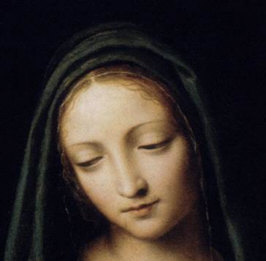
In a unique and singular sense, as the time for the Incarnation of the Son of God approached, – God’s radical invasion of our world – and then later during those initial months and years of the Incarnation, the Virgin Mary’s eyes were God’s eyes in Israel. Her outlook was dependable. As the angel Gabriel said to her: “…you have found favor with God” (Lk1:30). But more, for that particular time in the history of the world, God wanted maternal eyes scoping out the land and the people and sheltering His only-begotten Son.
Mary’s maternal eyes – and her maternal heart – were key to the Incarnation of the Son of God. She could see the will of God – she could understand the will of God as well as any human heart could fathom it. She became during those days – as Joshua and Caleb did in their own time – a Faith Leader for the people of God!
In our own time, we look to Mary and we must see in her this continuing role of Faith Leader for the Church. And more, as the Mother of Jesus Christ, she becomes a mystical Faith Leader for each member of the Mystical Body of Christ. She helps each member of the Church to see the Presence of God in His Church, she helps each one to see the unfolding designs of God for His Church, she encourages each one in following the Will of God. We can say that she understands the Incarnation and the Plan of Salvation and helps interpret these mysteries for us, in our individual lives.
When Mary reports to you what she has seen in God’s plan for your life – listen to her! She is only human, but 2000 years ago God specially equipped her for her role then and now in these latter times, God has specially equipped her for her new ongoing role within the Church, for now and for ever.
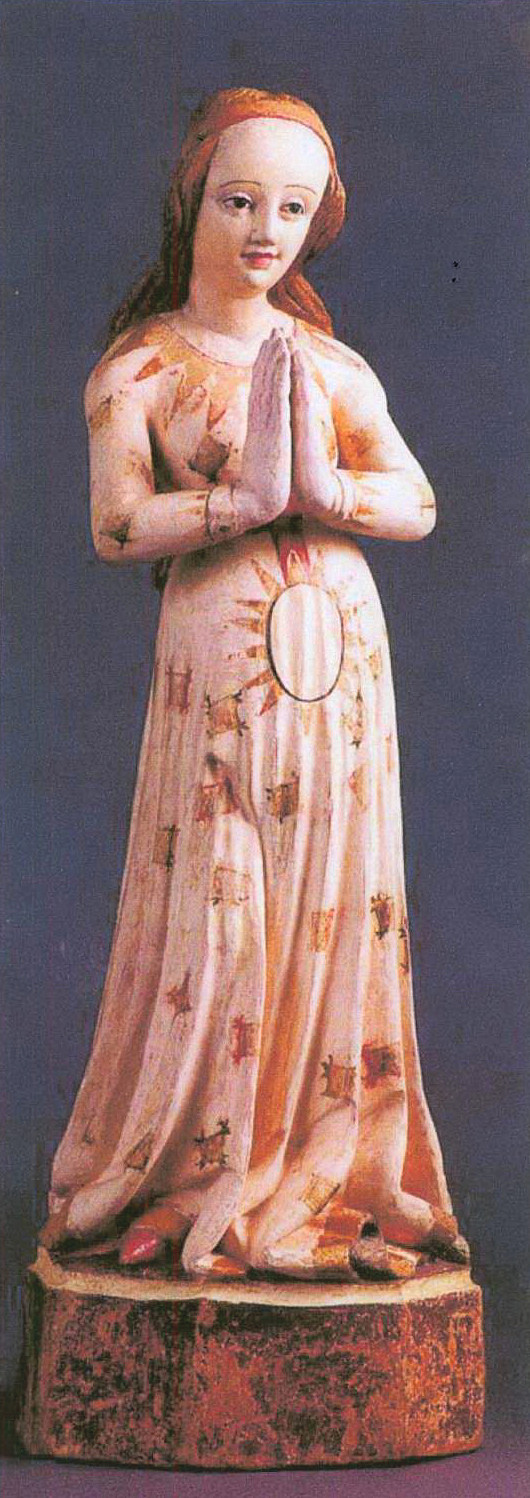 Maria in der Hoffnung, Cistercian Abbey of St. Mary Star, Panschwitz-Kuckau
In three separate encyclical letters Pius XII commented on the life, identity and glory of the Unborn Christ Child. In our last post we quoted from Mystici Corporis (On the Mystical Body of Christ).
Today, we will quote from two other encyclical letters of this saintly pope.
From his November 1947 encyclical Mediator Dei (On the Sacred Liturgy): #17
#17: No sooner, in fact, ‘is the Word made flesh’ than He shows Himself to the world vested with a priestly office, making to the Eternal Father an act of submission which will continue uninterruptedly as long as He lives: “When He cometh into the world He saith….’behold I come….to do Thy will’.”(Ref. Heb 10:7; 10:5-7)
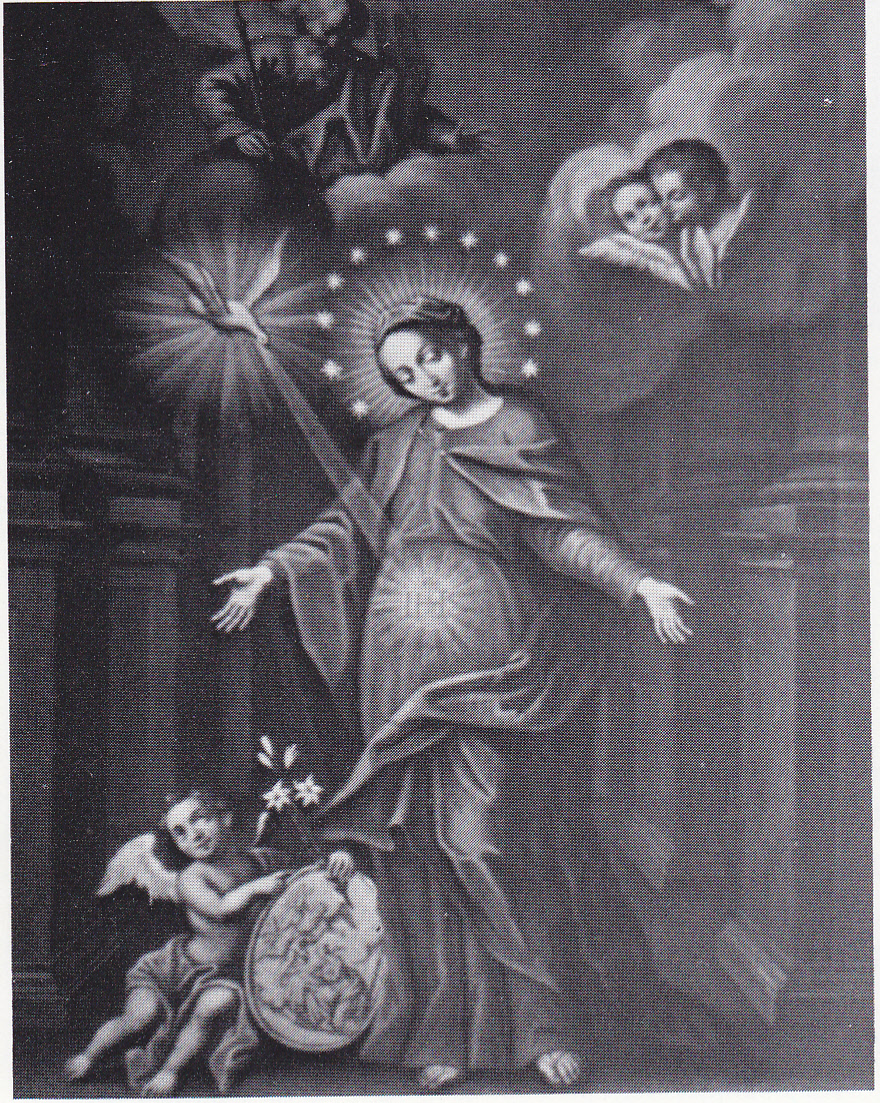 Munchen, Stadtmuseum
From his May 1956 encyclical Haurietis Aquas (On Devotion to the Sacred Heart): #’s , 57*, 63 .
57. “And finally – and this in a more natural and direct way – it is the symbol also of sensible love, since the body of Jesus Christ, formed by the Holy Spirit, in the womb of the Virgin Mary, possesses full powers of feelings and perception, in fact, more so than any other human body.”
#63: The adorable Heart of Jesus Christ began to beat with a love at once human and divine after the Virgin Mary generously pronounced Her “Fiat”; and the Word of God, as the Apostle remarks: “coming into the world, saith, ‘Sacrifice and oblation thou wouldst not; but a body thou hast fitted to Me; holocausts for sin did not please thee. Then said I, “Behold I come”; in the head of the book it is written of Me, “that I should do thy will, O God!’”…In which will we are sanctified by the oblation of the body of Jesus Christ once.” (Ref. Heb 10:5-7, 10)
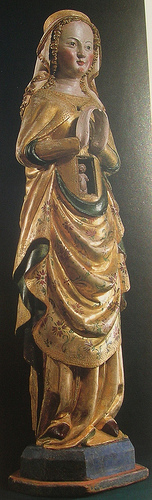
Pregnant Virgin Cistercian convent, St. Marienstern, in Panschwitz-Kuckau
In three separate encyclical letters Pius XII commented on the life, identity and glory of the Unborn Christ Child. He did not use the term “Unborn Christ Child” or “Unborn Jesus” as we typically do in this blog, nonetheless, he was speaking about Christ during the nine month period from His conception in the womb of Mary up until His nativity.
Today we will quote from Pope Pius’ June 1943 encyclical letter: Mystici Corporis (On the Mystical Body of Christ): #’s 30, 31, 48, 56, 75* (previously quoted on this blog several times), 98, 110.
#30: “…He (Christ) had been constituted the Head of the whole human family in the womb of the Blessed Virgin…”
#31: “…at the first moment of the Incarnation the Son of the Eternal Father adorned with the fullness of the Holy Spirit the human nature which was substantially united to Him…”
#56: If we examine closely this divine principle of life and power given by Christ, insofar as it constitutes the very source of every gift and created grace, we easily perceive that it is nothing else than the Holy spirit, the Paraclete, who proceeds from the Father and the Son, and who is called in a special way, the “Spirit of Christ” or the “Spirit of the Son.” For it was by this Breath of grace and truth that the Son of God anointed His soul in the immaculate womb of the Blessed Virgin; this Spirit delights to dwell in the beloved soul of our Redeemer as in His most cherished shrine.
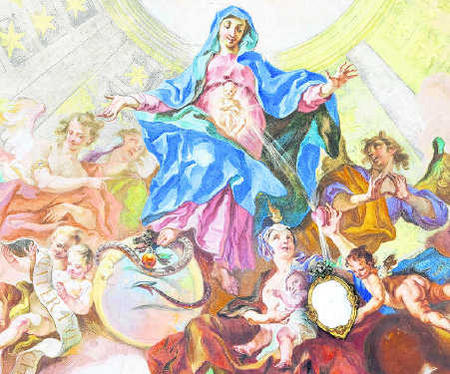
#75: But the knowledge and love of our Divine Redeemer, of which we were the object from the first moment of His Incarnation, exceed all that the human intellect can hope to grasp. For hardly was He conceived in the womb of the Mother of God, when He began to enjoy the Beatific Vision, and in that vision all the members of His Mystical Body were continually and unceasingly present to Him, and He embraced them with His redeeming love.
#98: “Now from the moment of His Incarnation, when He laid the first foundations of the Church, even to His last mortal breath, our Redeemer never ceased for an instant, though He was the Son of God, to labor unto weariness in order to establish and strengthen the Church…”
#110: …she whose sinless soul was filled with the divine spirit of Jesus Christ above all other created souls, who “in the name of the whole human race” gave her consent “for a spiritual marriage between the Son of God and human nature.” (St. Thos., III, q. 30, a.1, c) Within her virginal womb Christ our Lord already bore the exalted title of Head of the Church; in a marvelous birth she brought Him forth as the source of all supernatural life, and presented Him newly born, as Prophet, King and Priest to those who, from among Jews and Gentiles, were the first to come to adore Him
In our next post we will consider two other papal encyclicals in which saintly Pope expounds on Christ time in the womb.
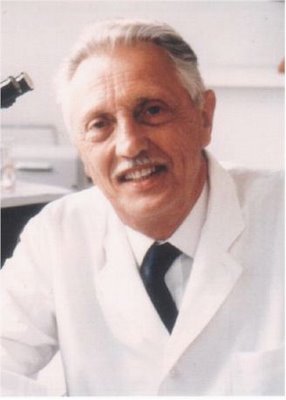
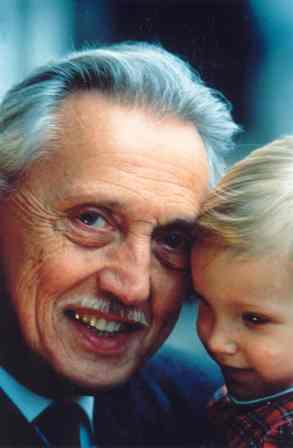
One of the greatest Pro – Life figures of the twentieth century – in fact, perhaps the greatest – was Dr. Jerome Lejeune, a Paris geneticist who discovered the cause of Down’s Syndrome and who worked tirelessly for its cure, and who traversed the globe repeatedly to speak on behalf of unborn children.
There is now in France a Jerome Lejeune Foundation, and its President, Jean-Marie Mene once said the following about Lejeune:
“Lejeune wasn’t afraid of mystery, he saw the promise it contains and tasted its sweetness. His faith and hope were the foundation that sustained him and he accepted the mystery with a smile on his face. The mystery made him stronger and brought him peace, because the truth he was looking for was just another name for beauty and love. It wasn’t an attack but an invitation to go beyond the tangible world in steadfast confidence that comes from the light we pray for….He knew that he lived in an order miraculously established by love and not in a world of tyranny of sheer chance…”
His was a science for Good, for him human DNA was a sign of a tremendous dignity buried within the heart of every human person, that is, the dignity of beings created in the likeness and image of God. When he approached his research, it was with respect for persons and Creation generally, and with serious purpose. Jean-Marie Mene recalls that Lejeune would say that: “medicine was his true vocation and that he became a scientist simply out of necessity”.
Too many scientists today have the wrong view of human life, seeing it as a thing to be manipulated rather than a sacred mystery to be respected and served. Lejeune stands out as a reminder that human life is a gift and mystery. Every person needs to discover both their own dignity and the sacredness of all human life, and live in such a way as to honor both. When scientists neglect these simple truths about human life they exercise Bad science, a science that manipulates rather than serves.
There should be a higher purpose to scientific inquiry, but to get to that higher purpose we need faith and grace. May God bless our world with holy scientists; scientists who fear God but aren’t “afraid of mystery”.
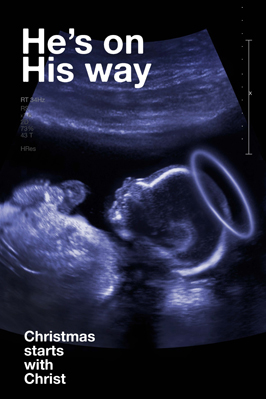
An exciting piece of news is coming out of England. An advertising group called Church Ads is starting a campaign that will lead up to Christmas called Baby Scan Jesus. It is an ultra-sound picture of Unborn Jesus with the words, ‘He’s on His way: Christmas starts with Christ’.
Here are some links about this ad campaign:
Protestant Churches risk abortion row with ‘Jesus scan’ advert
Jesus Ultrasound Poster Fuels U.K. Abortion Uproar
This baby from England gives a thumbs up to this ad:
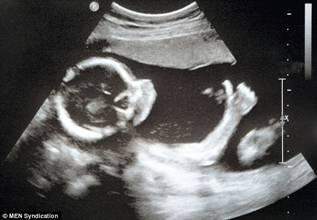
Unborn Baby Gives British Mom a Thumbs Up in Rare Ultrasound Picture
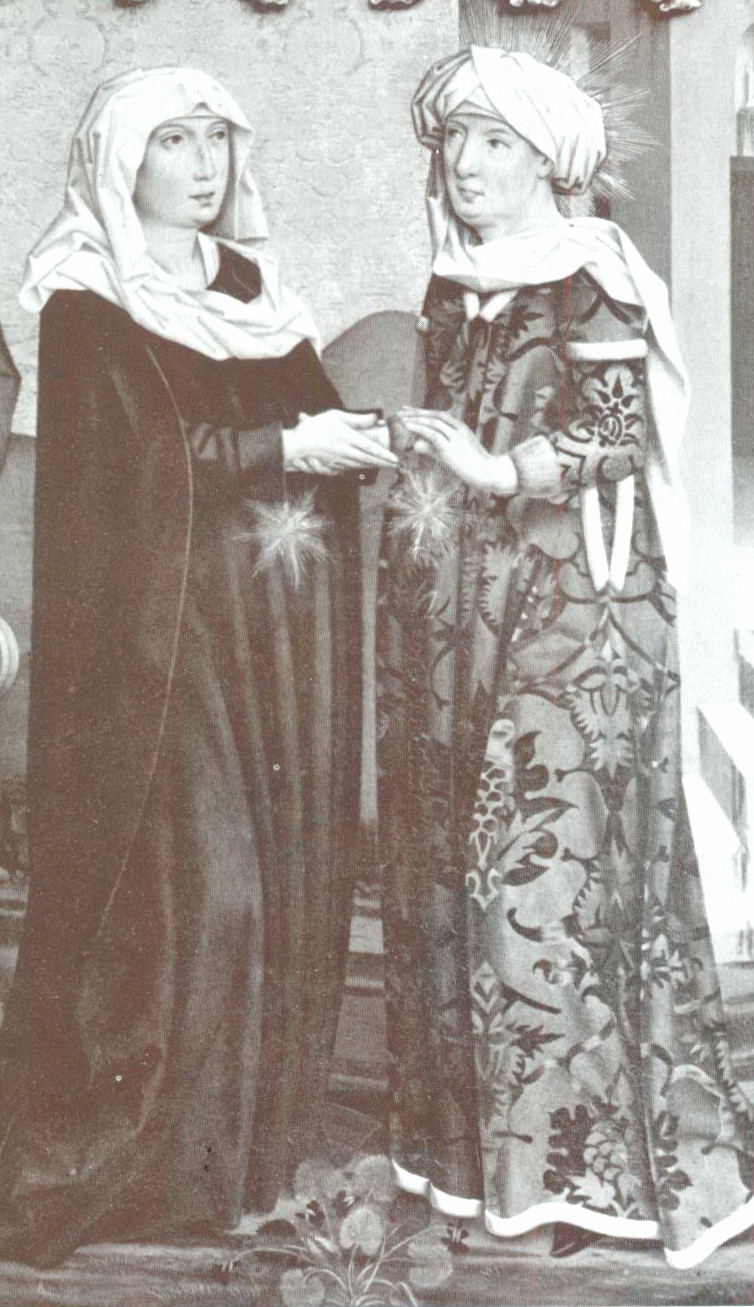
Fragment des Georgsaltares von Friedrich Herlin
Monday, May 31st is the Feast of the Visitation. After Mary conceived Christ in her womb, she “went with haste” to the home of her cousin Elizabeth (probably in Ain-Karim, on the outskirts of Jerusalem); about a 4 day journey. She traveled with confidence; Christ in her womb, the Spirit in her heart, the will of the Father clearly outlined within her intellect, and a peaceful harmony between God’s Will and her own.
The Gospel of Luke gives a wondrous account of Mary’s arrival at the home of Elizabeth (Lk 1:39-56). This encounter, this Gospel event of the first magnitude, is regrettably much neglected by believers in general. Yet it is a Pro-Life “Feast Day” of the first order! When Mother Teresa of Calcutta gave her famous Nobel Peace Prize acceptance speech she mentioned this prophetic scene of two unborn babies meeting. In his prophetic Pro -Life encyclical Evangelium Vitae (The Gospel of Life), John Paul II refers to this scene twice (#45, footnote to #61), calling it a “magnificent episode”. Others have marveled at this event as well, for example; Archbishop Fulton Sheen: “when pregnancy met pregnancy” we witness “A Pentecost came before Pentecost” (The World’s First Love).
Mary greets Elizabeth, unborn John leaps “for joy” in his mother’s womb. Luke feels compelled to relay this event twice (verses 41, 44). The Catechism of the Catholic Church weighs in on this beautiful mystery of our faith: “John was ‘filled with the Holy Spirit even from his mother’s womb’ by Christ himself, whom the Virgin Mary had just conceived by the Holy Spirit. Mary’s visitation to Elizabeth thus became a visit from God to His people” (CCC #717, emphasis added).
So, the just-conceived Unborn Christ acts deliberately here! He fills the unborn baby John with His Holy Spirit; virtually a gift of Himself, a redeeming gift which prefigures the salvation of the world. God has singled out one tiny unborn baby – just days after His Incarnation – into whose heart He pours His Spirit (fulfilling Gabriel’s promise of Lk 1:15). An exquisite prefiguring of His Redemptive Mission… and a tender sign of His impenetrable Love for all unborn babies (of whom John is a representative; every unborn baby).
Christians understand Jesus Christ as the answer and solution to our questions and problems. And He is that – the Way, the Truth and the Life for every human person.
But Pope Paul VI once made a telling observation: “Christ’s coming into the world creates for us the problem and duty of knowing Him” (General Audience, 12/28/66). In fact, the Pope said that knowing Christ is our “first duty”…that “we must set out to seek Christ…to study whatever we can know about Him.” He then directs our attention to the Gospel.
Thirty years later, John Paul II spoke about the Gospel of Life as consisting “in the proclamation of the very person of Jesus”, and that “Through the words, the actions and the very person of Jesus, man is given the possibility of ‘knowing’ the complete truth concerning the value of human life” (Evangelium Vitae, #29).
Here we are, in the midst of a ‘culture of death’ and we can see why Christ’s coming into the world is a sort of “problem”…. He is the fullness of Life and a champion of human rights and human life both – hence a champion of the human right to life! This message is not welcome in a ‘culture of death’. Christ’s message is part of who He is. So, in knowing Jesus Christ we come to know the fullness of human life and, as John Paul II says, we come to know “the complete truth concerning” human life.
For Christians, Christ is a problem if we love mammon more than God (Lk 16:13) or if we neglect prayer and the spiritual truths about life. It does seem to be a daily challenge to put Christ first in our lives. There is also a tendency for us all to superficially embrace our faith in Christ and falter in the demands of our faith.
Paul VI speaks of a spirit in the world promoting “systematic incertitude” and “systematic doubt and criticism”. This is precisely the anti-faith pseudo tolerance that is widespread today, which ‘tolerates’ the killing of unborn children while musing on the uncertainties of life and meaning in life. In Christ we find a great Truth, a Truth with certainty about the value of human life, a Truth that is compelling and problem-solving by nature. Christ’s Church has the duty to know Christ and His Truth, and is committed to hold on to this rock-solid Truth.
 UNBORN WORD of the day