


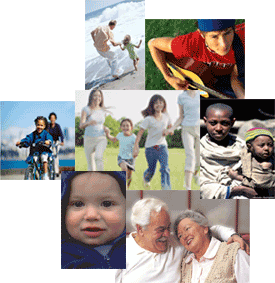
When the culture you live in respects and promotes human life will you even notice? Here are 10 “society-wide” signs to look for in a “Culture of Life”:
- Humble respect towards God, Source and Creator of human life and the beautiful universe we inhabit and the recognition that life is a gift to be cherished.
- Awe and respect for the origin of individual human life, that is, respect for the integrity of procreation and the incipient new life of the human embryo.
- Thoughtful respect for the sacred character of maternity and the right to life of the unborn child – particularly characterized by a medical profession that treats both mother and unborn child as “patients” and refuses to advocate the killing of a “patient”.
- Respect for all people with disabilities, and especially children with disabilities, such that the medical profession and other “caring professions” treat unborn and newborn children with disabilities as patients deserving of professional care and human compassion – not problems to be eliminated.
- That adoption is understood and appreciated as a life-giving, life-nurturing option for the individual child and for the well-being of society as a whole.
- Profound respect for the dignity of the elderly infirm and those who are dying along with corresponding compassionate care and services.
- Respect and societal support for the covenant/sacrament of marriage between a man and a woman.
- Respect and practical support for the institution of the family, sometimes called the “domestic church”, and even a “preferential option” for all children from infancy to adolescence.
- A genuine appreciation within Christianity, for that “childlike spirituality” so strongly encouraged by Jesus.
- A society that is known for an attitude of acceptance, forgiveness, compassion and understanding towards all, and particularly towards the poor, the sick, the weak and the marginalized.
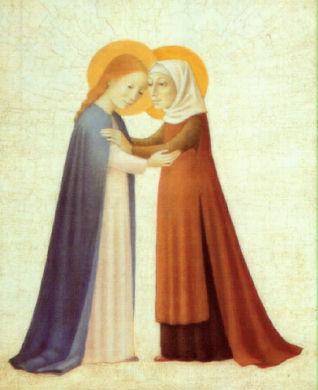
Archbishop Fulton Sheen, was born on May 08, 1895. Here is what he wrote about the Visitaion:
“One of the most beautiful moments in history was that when pregnancy met pregnancy ‑ when child bearers became the first heralds of the King of Kings. All pagan religions begin with the teachings of adults, but Christianity begins with the birth of a Child. From that day to this, Christians have ever been the defenders of the family and the love of generation.”
“If we ever sat down to write out what we would expect the Infinite God to do, certainly the last thing we would expect would be to see him imprisoned in a carnal ciborium for nine months; and the next to last thing we would expect is that the ‘greatest man ever born of a woman’ while yet in his mother’s womb, would salute the yet imprisoned God-man. But this is precisely what took place in the Visitation.”
Archbishop Fulton Sheen, Ph.D., D.D., The World’s First Love (Garden City, NY: Doubleday & Company, Inc., 1956), 31.
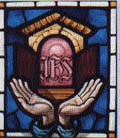
Hands of Elizabeth welcomes the yet unborn Jesus (IHS) into her home
Stained glass window from
BLESSED SACRAMENT CHAPEL
St. Edmunds College Canberra
How does God receive one’s intimate Christian prayer? If one prays simply: “Jesus I adore You”, how does the Lord view such a prayer? Or if one prays: “Jesus please protect the unborn children in my community who are at risk today”, what does the Lord do with such a simple prayer?
Doesn’t the Lord appreciate simplicity and heartfelt intimacy such as this?
And what if we whisper an intimate prayer to the Lord that He doesn’t hear from others, that is somewhat unusual, yet sincere and heartfelt, what does He do with such a prayer?
For example: “Unborn Jesus I adore You!” Or “Unborn Jesus please have pity upon the unborn children in my community who are at risk today”.
Is it possible that a prayer that is so different in its simplicity and intimacy could be perceived by God as something like a rare flower? Might it be that God especially cherishes one’s unique heartfelt expression of one’s love of Him or one’s petition to Him?
Let’s find out!

Kelly Clark had an interesting post concerning the recent discussion in the news about pro-abortion politicians receiving communion. Her title was: Bishops: I know you were busy with the Papal visit and all but Communion is…serious
We thought the following quotes and links would contribute to the ongoing discussion:
The following two quotes are taken from a memorandum sent by Cardinal Joseph Ratzinger, in his capacity as Prefect for the Sacred Congregation of the Doctrine of the Faith, in June 2004 to Cardinal Theodore McCarrick (who at that time was exercising leadership in the U. S. Conference of Bishops concerning matters of domestic policy). The memorandum is entitled Worthiness to Receive Holy Communion – General Principles:
“Regarding the grave sin of abortion or euthanasia, when a person’s formal cooperation becomes manifest (understood, in the case of a Catholic politician, as his consistently campaigning and voting for permissive abortion and euthanasia laws), his Pastor should meet with him, instructing him about the Church’s teaching, informing him that he is not to present himself for Holy Communion until he brings to an end the objective situation of sin, and warning him that he will otherwise be denied the Eucharist.”
“Not all moral issues have the same moral weight as abortion and euthanasia. For example, if a Catholic were to be at odds with the Holy Father on the application of capital punishment or on the decision to wage war, he would not for that reason be considered unworthy to present himself to receive Holy Communion. While the Church exhorts civil authorities to seek peace, not war, and to exercise discretion and mercy in imposing punishment on criminals, it may still be permissible to take up arms to repel an aggressor or to have recourse to capital punishment. There may be a legitimate diversity of opinion even among Catholics about waging war and applying the death penalty, but not however with regard to abortion and euthanasia.”
In Sacramentum Caritatis an Apostolic Exhortation issued by Pope Benedict on February 22, 2007 we find this:
“Here it is important to consider what the Synod Fathers described as Eucharistic consistency, … Evidently, this is true for all the baptized, yet it is especially incumbent upon those who, by virtue of their social or political position, must make decisions regarding fundamental values, such as respect for human life, its defense from conception to natural death, the family built upon marriage between a man and a woman, the freedom to educate one’s children and the promotion of the common good in all its forms (230). These values are not negotiable. Consequently, Catholic politicians and legislators, conscious of their grave responsibility before society, must feel particularly bound, on the basis of a properly formed conscience, to introduce and support laws inspired by values grounded in human nature (231). There is an objective connection here with the Eucharist (cf. 1 Cor 11:27-29). Bishops are bound to reaffirm constantly these values as part of their responsibility to the flock entrusted to them (232).”
Bishop Rene Henry Gracida, Bishop Emeritus of Corpus Christi, in an essay entitled A Twelve Step Program for Bishops said:
“If the Penal Canons of the Code are now to be dusted off and brought out of the cupboard within which they have lain dormant for almost half-a-century, it is because the balm of mercy and discretion of measure have failed to heal the growing infection of error and scandal inside the Church and the genocide increasing daily in the world around us. The time for half-measures and fear of reprisal, loss of position, temporal advantage, or career opportunity is over – the time for action in now.”
To bring into focus the application of canon law to this topic, we highly recommend the recent scholarly article by Archbishop Raymond L. Burke entitled The Discipline Regarding the Denial of Holy Communion to Those Obstinately Persevering in Manifest Grave Sin (Periodica De Re Canonica, Vol. 96, 2007) and the interview with Archbishop Burke conducted by Barbara Kralis entitled: Archbishop Raymond L. Burke, the new ‘John Fisher’ by Barbara Kralis August 5, 2004.
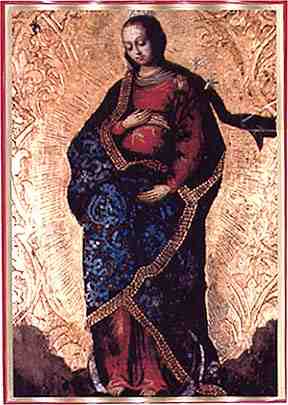
The emphasis of the French School of Spirituality (which had its beginning with Cardinal Pierre de Bérulle (1575-1629) and continued with his disciples such as the Venerable Jean-Jacques Olier (1608-1657) and St. John Eudes (1601-1680) was on the nine months during which Jesus lived in the womb of Mary. These men rightly perceived the mystery of the beauty and depth of the communication which took place between Mary and her Son during this blessed period. Olier and Eudes especially would speak of this communication as being between their hearts. St. Louis de Montfort also was influenced by this Spirituality when he entered Saint-Sulpice which was founded by Jean-Jacques Olier, one of the leading exponents of what came to be known as the ‘French School of Spirituality’.
Following are a few of the quotes about the Unborn Christ Child by St. Louis de Montfort from his Treatise on True Devotion to the Blessed Virgin:
“God the Son came into her virginal womb as a new Adam into his earthly paradise, to take his delight there and produce hidden wonders of grace. God-made-man found freedom in imprisoning himself in her womb. He displayed power in allowing himself to be borne by this young maiden.” 18
“Time does not permit me to linger here and elaborate on the perfections and wonders of the mystery of Jesus living and reigning in Mary, or the Incarnation of the Word. I shall confine myself to the following brief remarks. The Incarnation is the first mystery of Jesus Christ; it is the most hidden; and it is the most exalted and the least known. It was in this mystery that Jesus, in the womb of Mary and with her co- operation, chose all the elect. For this reason the saints called her womb, the throne-room of God’s mysteries.” 248
“Our good Master stooped to enclose himself in the womb of the Blessed Virgin, a captive but loving slave, and to make himself subject to her for thirty years. As I said earlier, the human mind is bewildered when it reflects seriously upon this conduct of Incarnate Wisdom. He did not choose to give himself in a direct manner to the human race though he could easily have done so. He chose to come through the Virgin Mary. Thus he did not come into the world independently of others in the flower of his manhood, but he came as a frail little child dependent on the care and attention of his Mother. Consumed with the desire to give glory to God, his Father, and save the human race, he saw no better or shorter way to do so than by submitting completely to Mary.” 139
Prominent Men and Women of or influenced by the French School:
· Cardinal Pierre de Bérulle (1575-1629)
· Jean-Jacques Olier (1608-1657), disciple of Cardinal Berulle. Olier founded the Society of St. Sulpice, in 1642, to train and form future priests
· Jeanne Chezard de Matel (1596-1670), foundress of the Sisters of the Incarnate Word in Avignon, France, in December, 1639.
· St.John Eudes, founder of the Eudists.
· St. Louis de Montfort. (1673-1716)
· Blessed William Joseph Chaminade (1761-1850)
Ben Stein in “Ferris Bueller’s Day Off”
Ben Stein vs. Big Science! Ben’s new movie “Expelled” is worth going to see. First of all, he presents a serious subject with a lot of humor which makes it quite enjoyable. But more importantly, Ben is trying to promote a culture of life from an unusual perspective.
It is a thought provoking movie aimed at generally promoting “freedom of thought” and specifically within the scientific community. Many influential scientists promote their own aggressive agendas based on “freedom of choice” but are opposed to “freedom of thought”. Watch to see how Ben links the culture of death mentality with narrow-minded Darwinism and a culture of life approach with openness to Intelligent Design theory.*
I first saw Ben Stein speak at a Pro – Life conference around 1986 when I was the Education Director for the Right to Life League of Southern California. He was our featured speaker and did a great job. I just saw his new movie – which begins with him giving a speech to a crowd – and it brought back fond memories. Ben entertains while he educates, inspires while he informs – what a concept!

*Others have made this same connection between the Culture of Death mentality and Darwin. For a readable scholarly look at the bigger picture see Architects Of The Culture Of Death by my former Philosophy professor, Donald DeMarco and his co-author Benjamin Wiker. In this book they have exposed its roots by introducing its “architects.” In a scholarly, yet reader-friendly delineation of the mindsets of twenty-three influential thinkers, such as Ayn Rand, Charles Darwin, Karl Marx, Jean-Paul Sartre, Alfred Kinsey, Margaret Sanger, Jack Kevorkian, and Peter Singer, they make clear the aberrant thought and malevolent intentions that have shaped the Culture of Death.
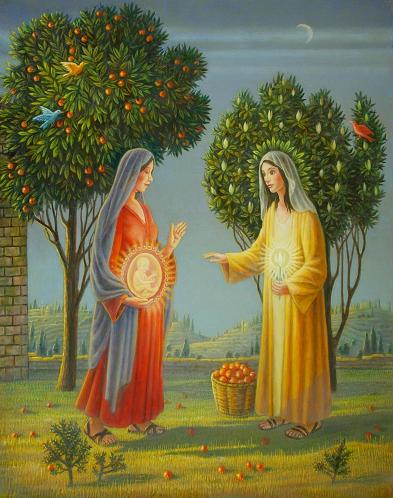
In his address to the conference on The Human Embryo in the Pre-Implantation Phase, Pope Benedict XVI points out that at the Visitation, when Jesus had been conceived only a few days earlier (therefore in the pre-implantation phase) His presence was perceived by another unborn baby, John the Baptist.
“As it is easy to see, neither Sacred Scripture nor the oldest Christian Tradition can contain any explicit treatment of your theme. St Luke, nevertheless, testifies to the active, though hidden, presence of the two infants.
He recounts the meeting of the Mother of Jesus, who had conceived him in her virginal womb only a few days earlier, with the mother of John the Baptist, who was already in the sixth month of her pregnancy: ‘When Elizabeth heard Mary’s greeting, the baby leapt in her womb’ (Lk 1: 41).
St Ambrose comments: Elizabeth ‘perceived the arrival of Mary, he (John) perceived the arrival of the Lord, the woman the arrival of the Woman, the child, the arrival of the Child’ (Comm. in Luc. 2: 19, 22-26).”
Clementine Hall
Monday, 27 February 2006
Christ is the hope of the pro-life movement. Pope Benedict reminded us at Midnight Mass on December 24 , 2006 that hope for the pro-life movement can be drawn from the saving work of Jesus Christ – even his saving work as an infant.
“The child of Bethlehem directs our gaze towards all children who suffer and are abused in the world, the born and the unborn…. In all of these it is the Child of Bethlehem who is crying out to us; it is the God who has become small who appeals to us…”
“God has become one of us, so that we can be with him and become like him. As a sign, he chose the Child lying in the manger: this is how God is. This is how we come to know him. And on every child shines something of the splendor of that “today”, of that closeness of God which we ought to love and to which we must yield – it shines on every child, even on those still unborn.” Pope Benedict XVI – Midnight Mass Homily – Christmas Eve 2006.
Filed under: Biblical Reflections, Fathers of the Church, Pope Benedict XVI
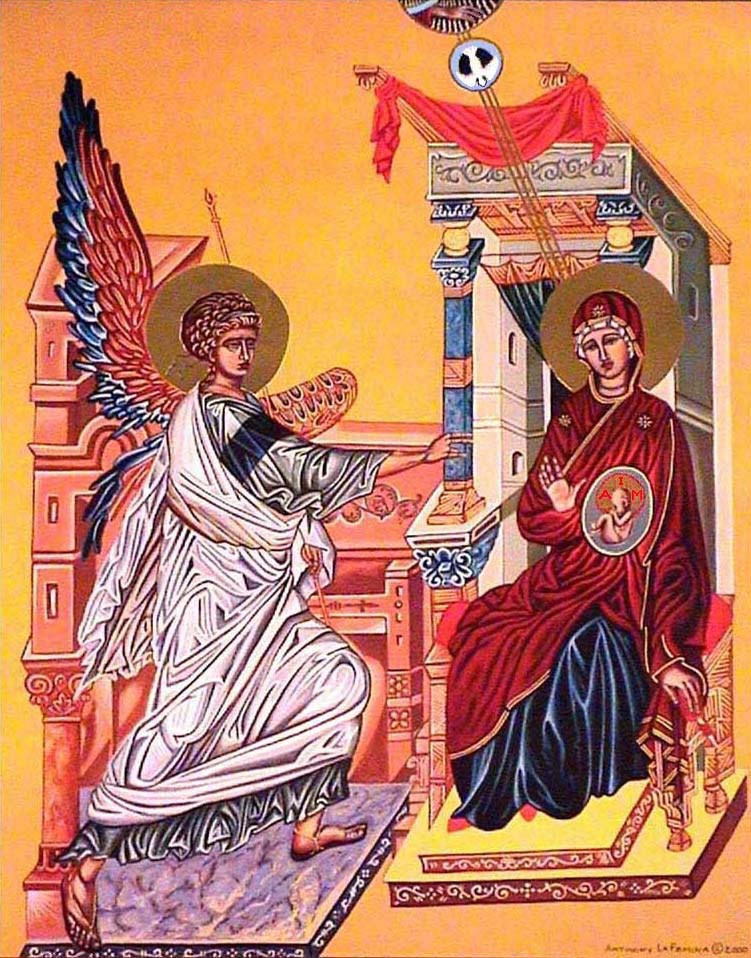
“The Lord has sworn in truth to David…’I will set upon your throne the fruit of your body'” Psalm 132:11
In the following passage Pope Benedict XVI comments on Psalm 132:11 by using a lengthy quote from St. Irenaeus:
“Let us end by remembering that the beginning of this second part of Psalm 132 was commonly used by the Fathers of the Church to describe the Incarnation of the Word in the Virgin Mary’s womb. St Irenaeus, referring to the prophecy of Isaiah about the Virgin in labour, had already explained:”
“The words: ‘Listen, then, O house of David!’ (Is 7: 13), indicate that the eternal King, whom God had promised David would be ‘the fruit of [his] body’ (Ps 132:11), was the same One, born of the Virgin and descended from David.Thus, God promised him that a king would be born who was ‘the fruit of [his] body’, a description that indicates a pregnant virgin. Scripture, therefore…sets down and affirms the fruit of the womb to proclaim that the One to come would be begotten of the Virgin. Likewise, Elizabeth herself, filled with the Holy Spirit, testified, saying to Mary: ‘Blessed are you among women and blessed is the fruit of your womb’ (Lk 1:42). In this way the Holy Spirit points out to those who want to hear him that in the Virgin’s, that is, Mary’s, giving birth is fulfilled God’s promise to David that he would raise up a king born of his body” (Contro le Eresie, 3, 21, 5: “Già e Non Ancora”, CCCXX, Milan, 1997, p. 285).
BENEDICT XVI
GENERAL AUDIENCE
Wednesday, 21 September 2005
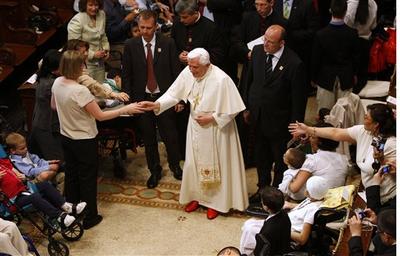
Benedict XVI meeting with disabled youth at St. Joseph‘s Seminary in Yonkers, NY.
How exciting for us to have had Pope Benedict XVI visit the United States with the message of Christ Our Hope. We all need hope in this world. Benedict spoke on many wonderful topics and it will take time to really digest his message. Following are 5 pro-life quotes by Benedict given at 4 different New York venues.
While at St. Patrick’s Cathedral he said:
“ The Church…is called to proclaim the gift of life, to serve life, and to promote a culture of life….The proclamation of life, life in abundance, must be the heart of the new evangelization.”
In his meeting with disabled children at St. Joseph’s Seminary in Yonkers he expressed God’s love for them:
“God has blessed you with life, and with differing talents and gifts….God’s unconditional love, which bathes every human individual, points to a meaning and purpose for all human life.”
At the final Mass at Yankee Stadium he told us that Christ’s truth supports us in our respect for human life (at this point the crowd broke into applause).
“May you find the courage to proclaim Christ, “the same, yesterday, and today and for ever” and the unchanging truths which have their foundation in him (cf. Gaudium et Spes, 10; Heb 13:8). These are the truths that set us free! They are the truths which alone can guarantee respect for the inalienable dignity and rights of each man, woman and child in our world – including the most defenseless of all human beings, the unborn child in the mother’s womb.”
And he praised Catholics in this country:
“In our day too, the Catholic community in this nation has been outstanding in its prophetic witness in the defense of life…”
We know that one of the arduous tasks of our generation is to fight for the unborn. In his Address at the U.N, Pope Benedict reminded us that each generation has had it’s own arduous fight for justice.
“In my recent Encyclical, Spe Salvi, I indicated that “every generation has the task of engaging anew in the arduous search for the right way to order human affairs” (no. 25). For Christians, this task is motivated by the hope drawn from the saving work of Jesus Christ.”
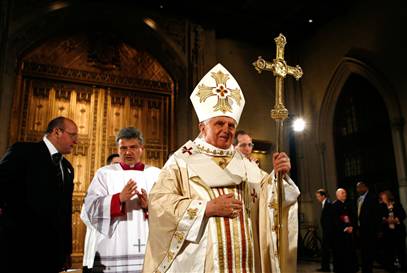
Pope Benedict XVI celebrates Mass at St. Patrick’s Cathedral in New York on Saturday. Shannon Stapleton / AP
Stating that the Church is called to “proclaim the gift of life, to serve life, and to promote a culture of life” at St. Patrick’s Cathedral today Pope Benedict paid tribute to two great Pro-life leaders, Cardinal Cooke and Cardinal O’Connor.
“The Church, as “a people made one by the unity of the Father, the Son and the Spirit” (cf. Lumen Gentium, 4), is called to proclaim the gift of life, to serve life, and to promote a culture of life. Here in this cathedral, our thoughts turn naturally to the heroic witness to the Gospel of life borne by the late Cardinals Cooke and O’Connor. The proclamation of life, life in abundance, must be the heart of the new evangelization. For true life – our salvation – can only be found in the reconciliation, freedom and love which are God’s gracious gift.”
HOMILY OF HIS HOLINESS BENEDICT XVI
St Patrick’s Cathedral, New York
Saturday, 19 April 2008
We would like to document some of the pro-life efforts of these two great men who were early and courageous defenders of the unborn.
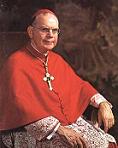
Terence Cardinal Cooke
In a May 22, 1972 article in Time magazine, entitled, The Abortion Issue, Cardinal Cooke’s early efforts to repeal the abortion law in New York are detailed. Issuing his own letter in New York against abortion from all of the pulpits in 1972, he supported New York citizens who were fighting this law. He also published a pro-life letter that President Nixon sent to him. The letter, endorsing the repeal (pro-life) movement and calling it a “noble endeavor,” was released by the Cardinal’s office-with tacit, if not explicit, White House approval. In 1972, Terence Cardinal Cooke was one of the first to describe abortion as “slaughter of the innocent unborn”.
Cardinal Cooke’s final letter read on October 8 and 9th, 1983, the weekend after his death was a letter on the sanctity of the gift of life.
And as many of you know, his successor, Cardinal O’Connor took up the pro-life cause and became another hero for the pro-life movement.
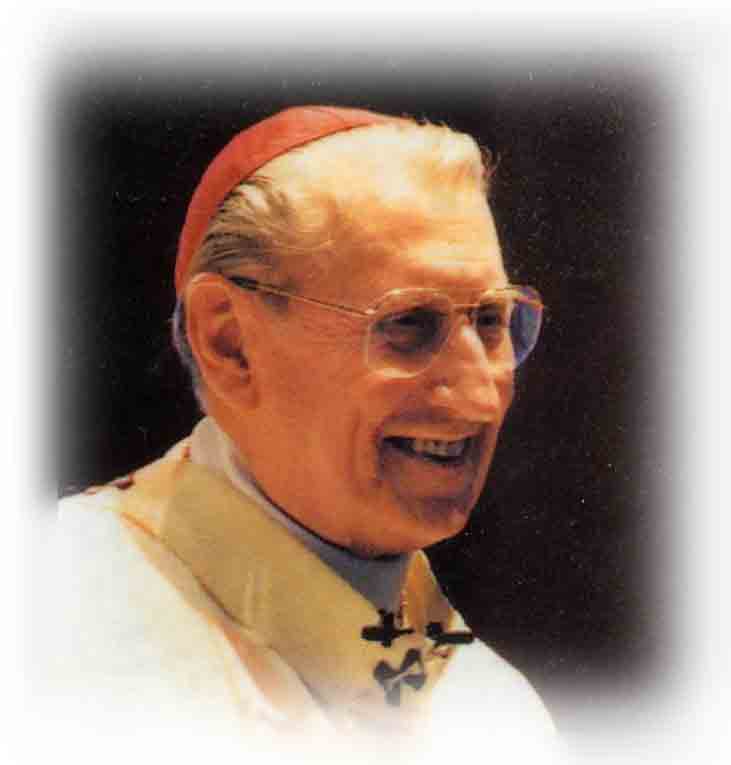
John Cardinal O’Connor
EWTN has a wonderful tribute to Cardinal O’Connor on his death which details many of his wonderful efforts on behalf of the unborn.
1. He was committed to the right to life and showed his concern by wearing on the lapel of his black clerical suit a tiny red rose with its stem spelling out “l–i–f–e“.
2. He participated at the annual Right to Life March held in Washington, DC.
3. He formed a religious community, the Sisters of Life who are dedicated to protecting the sacredness of all human life beginning with the infant in the womb to those vulnerable to the threat of euthanasia.
4. In addition, he repeated an offer many times to any woman in need: “go to him for help rather than abort her child”. The Archdiocese of New York and Catholic charities responded by providing hundreds of women with medical assistance, housing, adoption and legal services, as well as, the Cardinal himself counseling women in difficult situations.
These are the two men whom Pope Benedict held up as authentic pro-life heroes when he called on the Church to “proclaim the gift of life, to serve life, and to promote a culture of life”.
Pope Benedict is scheduled to visit U.N. headquarters on Friday to meet with Secretary-General Ban Ki-moon and to address the General Assembly. Archbishop Celestine Migliore, the Holy See’s U.N. observer, said the pope is coming to the U.N. as “a pilgrim of peace” to promote cultural and religious dialogue based on fundamental human rights that are non-negotiable.
In an Address given last September in Hofburg Germany Benedict said this:
“The fundamental human right, the presupposition of every other right, is the right to life itself. This is true of life from the moment of conception until its natural end. Abortion, consequently, cannot be a human right – it is the very opposite. It is “a deep wound in society”, as the late Cardinal Franz König never tired of repeating.
In stating this, I am not expressing a specifically ecclesial concern. Rather, I wish to act as an advocate for a profoundly human need, speaking out on behalf of those unborn children who have no voice. In doing so, I do not close my eyes to the difficulties and the conflicts which many women are experiencing, and I realize that the credibility of what we say also depends on what the Church herself is doing to help women in trouble.
In this context, then, I appeal to political leaders not to allow children to be considered as a form of illness…”
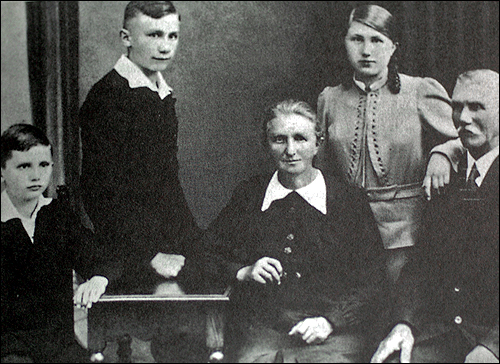
Joseph Ratzinger, far left, is seen with his family,father Josef, sister Maria, mother Maria, brother Georg. 1938 (AP Photo / German Catholic News Agency KNA)
LifeNews had an interesting biographical note about Pope Benedict this week:
“An author writing a new biography on Pope Benedict XVI says genocide during the Nazi regime in World War II played a key role in shaping the pro-life views of the Catholic leader. Author Brennan Pursell relates the story in his upcoming book Benedict of Bavaria.
Pursell learned of the tragic story while compiling material for the book. He found out that, as a 14-year-old boy, Joseph Ratzinger had a cousin born with Down Syndrome who was just a couple years younger. In 1941, German “therapists” arrived at the boy’s home and took him away — possibly telling his parents of the new governmental regulation against mentally disabled children living at home. Despite pleas from the boy’s family, German officials took him away and he very likely became a victim of the genocide that claimed hundreds of thousands of lives during the war.
“This was Joseph Ratzinger’s first experience of a murderous philosophy that asserts that some people are disposable,” Pursell explains. Because of the terrible incident, Pope Benedict presents a consistently pro-life world view that opposes abortion as well as euthanasia and assisted suicide. Full story at LifeNews.com.”
Here is a quote from Pope Benedict that relates to this subject:
“Life, which is a work of God, should not be denied to anyone, even the tiniest and most defenseless unborn child, and far less to a child with serious disabilities. At the same time, echoing the Pastors of the Church in Italy, I advise you not to fall into the deceptive trap of thinking that life can be disposed of, to the point of ‘legitimizing its interruption with euthanasia, even if it is masked by a veil of human compassion’
Benedict XVI, Angelus
St Peter’s Square
Sunday, 4 February 2007
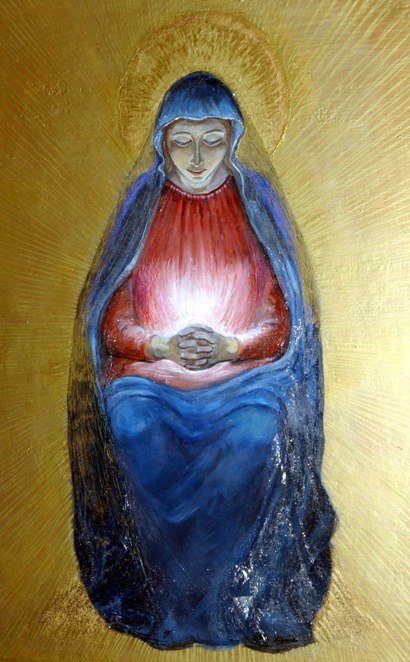
WITHOUT THE LORD’S DAY, SUNDAY, LIFE DOES NOT FLOURISH
At the conclusion of Mass, Pope Benedict went out into the adjoining square where he climbed a podium to pray the Angelus. Before the Marian prayer he said:
“Just as Mary bore Him in her womb – a defenseless little Child, totally dependent on the love of His Mother – so Jesus Christ, under the species of bread, has entrusted Himself to you, dear brothers and sisters.
Love Him as Mary loved Him! Bring Him to others, just as Mary brought Him to Elizabeth as the source of joyful exultation! The Virgin gave the Word of God a human body, and thus enabled Him to come into the world as a man.
Give your own bodies to the Lord, and let them become ever more fully instruments of God’s love, temples of the Holy Spirit! Bring Sunday, and its immense gift, into the world!”
Stephansplatz, Vienna
Sunday, 9 September 2007
The Holy Father needs our prayers as he brings the message of Christ to the United States this week.
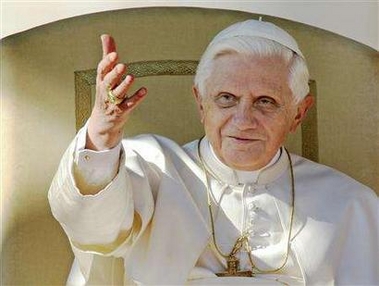
Pope Benedict will be visiting America in a few days. The above quote is taken from the Message of The Holy Father Benedict XVI to Catholics and People of the United States of America on the Occasion of the Upcoming Apostolic Journey.
When I think about our Holy Father’s words ‘Christ is the face of God present among us’, I think of how Christ was conceived, lived nine months in the womb, was born and lived an ordinary life for 30 years, as a baby, toddler, young boy, teenager and adult. He had a mother, an adoptive father – he went to school, synagogue, had friends and worked as a laborer. St. Francis of Assisi once said “Preach the Gospel always, and when necessary use words”. Christ first showed us the face of God by being present among us in ordinary life. He showed us that each stage of life is precious – precious enough for God to participate in each of these stages.
Then he preached and taught in the most wonderful way. He showed us his love in his actions and words.
On April 5 at a conference in Rome Benedict XVI spoke these words about how the Church should approach those who have participated in abortion:
“The Church has the primary duty to approach these people with love and delicacy, with kindness and maternal concern, in order to announce the merciful closeness of God and Jesus Christ. … Yes, the gospel of love and of life is also always the gospel of mercy.”
The Holy Father asks us to pray for his visit. He and the Bishops have picked as the theme of this visit, ‘Christ Our Hope”. Let us pray that Pope Benedict is able to help reveal the ‘face of Christ’ to our nation. Let us pray to Christ our hope that the Gospel of Life which Benedict referred to as the Gospel of Mercy will touch our nation this April. Pope Benedict reminds us: “I am convinced that without the power of prayer, without that intimate union with the Lord, our human endeavours would achieve very little.”
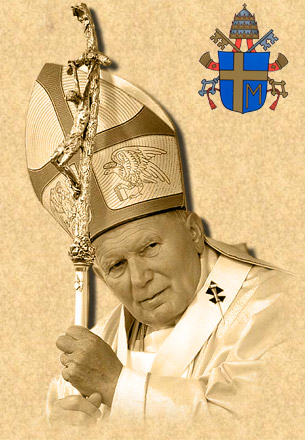
In 1999, at the age of 78, John Paul II wrote a fascinating letter. Fascinating, because as a senior citizen he wrote a Letter to the Elderly.
John Paul reminds us that: “In the past, great respect was shown to the elderly.” But today “among some peoples old age is esteemed and valued, while among others this is much less the case….”
He goes on to point out: “It has come to the point where euthanasia is increasingly put forward as a solution for difficult situations”.
There are many inspiring words of wisdom and counsel in this letter to the elderly but what I found interesting is that he points out the many prominent Biblical figures who in the later years of their lives did great things for God.
He gives 10 examples:
1. “Abraham, in whom the privilege of old age is stressed, this favour takes the form of a promise: ‘I will make of you a great nation, and I will bless you and make your name great. I will bless those who bless you and him who curses you I will curse; in you all the families of the earth will be blessed’ (Gen 12:2-3)”
2. “Sarah, a woman who sees her body growing old, yet experiences within the limitations of her aging flesh the power of God who makes good every human shortcoming.”
3. “Moses too was an old man when God entrusted him with the mission of leading the Chosen People out of Egypt. It was not in his youth but in his old age that, at the Lord’s command, he did mighty deeds on behalf of Israel.”
4. “Tobit, who humbly and courageously resolved to keep God’s Law, to help the needy and to endure blindness patiently, until the angel of God intervened to set his situation aright (cf. Tob 3:16-17).”
5. “Eleazar, whose martyrdom bore witness to an exceptional generosity and strength (cf. 2 Macc 6:18-31).”
6. “The Gospel of Luke begins by introducing a married couple ‘advanced in years’ (1:7): Elizabeth and Zechariah, the parents of John the Baptist. The Lord’s mercy reaches out to them (cf. Lk 1:5-25, 39-79)”
7. “…the aged Simeon, who had long awaited the Messiah. Taking the child in his arms, Simeon blesses God and proclaims the Nunc Dimittis: ‘Lord, now let your servant depart in peace’ (Lk 2:29).”
8. “Anna, a widow of eighty-four, a frequent visitor to the Temple, who now has the joy of seeing Jesus. The Evangelist tells us that ‘she began to praise God and spoke of the child to all who were looking for the redemption of Jerusalem’ (Lk 2:38).”
9. “Nicodemus too, a highly-regarded member of the Sanhedrin, was an elderly man. He visited Jesus by night in order not to be seen. To him the Divine Teacher reveals that he is the Son of God who has come to save the world (cf. Jn 3:1-21). Nicodemus appears again at the burial of Jesus, when, bringing a mixture of myrrh and aloes, he overcomes his fear and shows himself a disciple of the Crucified Lord (cf. Jn 19:38-40).”
10. “And what shall we say of Peter in his old age, called to bear witness to his faith by martyrdom? Jesus had once said to him: ‘When you were young you girded yourself and walked where you would; but when you are old, you will stretch out your hands, and another will gird you and carry you where you do not wish to go’ (Jn 21:18).”
He ends this list with a quote from the Psalms:
“The just will flourish like the palm-tree, and grow like a Lebanon cedar…, still bearing fruit when they are old, still full of sap, still green, to proclaim that the Lord is just” Psalm 92 (vv. 13, 15-16).
John Paul lived this fruitfulness in his own life – for after this letter – even in his old age he continued strong writing one more Encyclical letter Ecclesia de Eucharistia (17 April 2003) and 12 Apostolic letters. He also proclaimed a Jubilee year (2000) and met with the Youth in Canada in 2002. He wrote numerous letters and preached the Angelus message regularly till March 20, 2005 just a couple of weeks before his death.
Especially impressive were the 18 Pilgrimages (to 24 countries) that he made after 1999, which are listed here:
In 2000 (Fatima, Jubilee Pilgrimage to the Holy Land, and the Jubilee Pilgrimage to Mount Sinai) – in 2001 Kazakhstan, Armenia, Ukraine, and the Jubilee Pilgrimage “in the footsteps of Saint Paul the Apostle”: Greece, Syria, Malta) – in 2002 (Poland, Toronto, Ciudad de Guatemala and Ciudad de México, Azerbaijan, Bulgaria and Ischia) -in 2003 (Pompei (Italy), Slovakia, Bosnia and Herzegovina, Croatia and Spain) – in 2004 (Loreto (Italy), Lourdes (France) and Bern (Switzerland) ).
John Paul II certainly lived what he preached in this letter!
A great man whom I once met – Eddie Doherty – had been a writer when he was younger and received a special dispensation to become a priest at the age of 78. When I met Father Eddie he was even older – I will always remember a wonderful thing he said to me one day:
“I’m going to get older and older and then I am going to die and get younger and younger…”
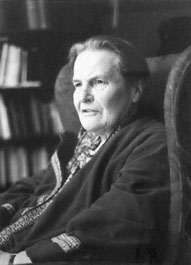
Robert George begins his obituary on G. E. M. Anscombe (born Gertrude Elizabeth Margaret Anscombe) this way:
.E.M. (“Elizabeth”) Anscombe, who died at the age of 81 was a titan in the world of philosophy, and one of the 20th century’s most remarkable women.
Elizabeth Anscombe was a convert to the Catholic Church and considered one of the great women philosophers of the 20th century. She was well-known for her work with the philosopher Ludwig Wittgenstein and her groundbreaking tome entitled Intentions.
She was also known for a debate that she had in 1948 with C. S. Lewis on one of the chapters in his book Miracles. She won the debate and as a “result of the weaknesses pointed out in the contest, Lewis substantially rewrote the chapter for future editions of the book. Admirers of Lewis have made much of this event – some associates (primarily George Sayer and Derek Brewer) remarked that this loss was so humiliating for Lewis that he abandoned theological argument and turned entirely to devotional writing and children’s literature.” She thought these youthful admirers greatly exaggerated the negative impact on Lewis and admired him for making the changes to the chapter.
She fully supported Pope Paul VI when he came out with his encyclical letter Humane Vitae and was an ardent pro-lifer. As a full professor of Philosophy at Cambridge University she shocked her colleagues by twice participating in, and being arrested at, peaceful pro-life protests in England adopting the ‘Operation Rescue’ approach. Two of her daughters were also arrested with her at these events.
In 1977 she came out with an incredible defense of the Catholic Church’s position against contraception entitled Contraception and Chastity. I just recently discovered this gem and would recommend that anyone interested in this topic read this article. It is a unique take on this subject and really gets to the heart of the matter. She provides historical context which is fascinating and her line of argumentation shows why the world we live in has changed so sadly and drastically since contraception came into widespread use.
Elizabeth married fellow convert and philosopher Peter Geach with whom she had 7 children.
 UNBORN WORD of the day