Today I received my weekly issue of the Vatican Newspaper L’Osservatore Romano and read the Pope’s Homily for the Feast Day of Epiphany (1/6/08). Here is a short excerpt:
“…the birth of the King of the Jews had been announced by the rising of a star, visible from afar…Once again heaven and earth, the cosmos and history, call to each other and respond. The ancient prophecies find confirmation in the language of the stars…‘A star shall come forth out of Jacob, and a scepter shall rise out of Israel’ (Nm 24:17), announced Balaam, the pagan seer, when he was summoned to curse the people of Israel, whom he instead blessed because, as God had revealed to him, ‘they are blessed’ (Nm 22:12).
In his commentary on Matthew’s Gospel, Cromatius of Aquileia establishes a connection between Balaam and the Magi: ‘He prophesied that Christ would come; they saw him with the eyes of faith…The star was seen by everyone but not everyone understood its meaning. Likewise, our Lord and Saviour was born for everyone, but not everyone has welcomed him’ (4:1-2).”
The three wise men – pagans all – saw the star and were spiritually enlightened. Their intellects were illumined by it and their wills ignited; they set out on a journey to locate a baby King . But when they first saw the star the baby was still unborn, on His own journey, growing within the womb. A prophetic convergence would eventually take place when the unborn baby would come out from the dark womb to shine in His manger/cave and the wise men would arrive to behold this purer holier light, and even hold it in their arms.
We have decided to use our UNBORN WORD ALLIANCE logo as our visual image (above) for this post because it captures this sentiment: a star, containing within it a heart (which symbolizes the Word of God coming to us) as the star touches the earth, the Word goes forth to the very ends of the earth.
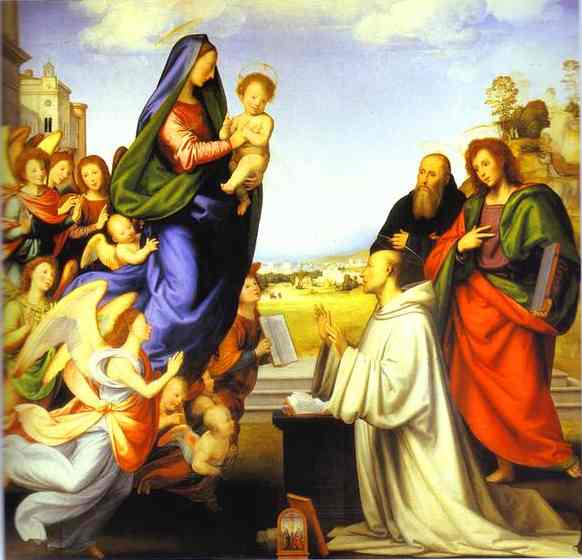
In his book, Treatise on the Love of God Creator, St. Francis de Sales tells of a vision that St. Bernard of Clairvaux had as a young boy.
“The most sweet St. Bernard, as yet a little boy at Chastillon-sur-Seine, was waiting in Church on Christmas night for the divine office to begin, and while waiting the poor child fell into a light slumber, during which he saw in spirit, yet in a vision very distinct and clear, how the Son of God, having espoused human nature, and becoming a little child in His Mother’s most pure womb, was with a humble sweetness mingled with a celestial majesty, virginally born of her:-As a bridegroom coming out of his bride-chamber: a vision, which so replenished the loving heart of the little Bernard with gladness, jubilation and spiritual delights, that he had all his life an extreme sense of it, and therefore, though afterwards as a sacred bee he ever culled out of all the divine mysteries the honey of a thousand sweet and heavenly consolations, yet had he a more particular sweetness in the solemnity of the Nativity, and spoke with a singular relish of this birth of his Master.”
Treatise on the Love of God Creator: St. Francis de Sales, (1567-1622)
Filed under: Unborn Jesus
There are countless ways to honor Christ Unborn. But one way to consider this question is to reflect on the eight people and one angel mentioned in the Gospels as particularly honoring Jesus during His 9 months in the womb. These 9 are: the Archangel Gabriel, Mary, Unborn John the Baptist, Elizabeth and Zechariah (John’s parents), Joseph and finally the 3 wise men.
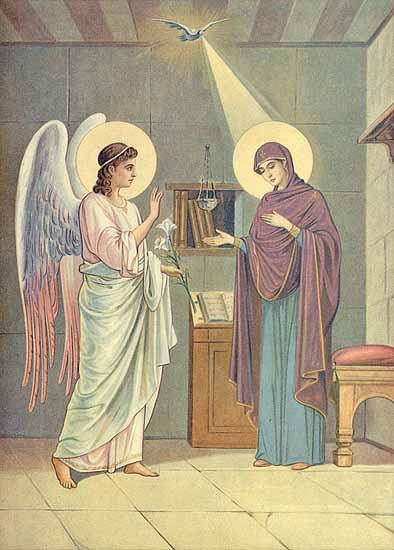
The Archangel Gabriel honors Unborn Jesus through the profound reverence with which he announces His entrance into the world (Lk 1:5-17, 26-38).
Mary honored Unborn Jesus by accepting wholeheartedly the Plan and invitation of God to be mother to the Messiah/Savior and by then loving Him (Lk 1:38).
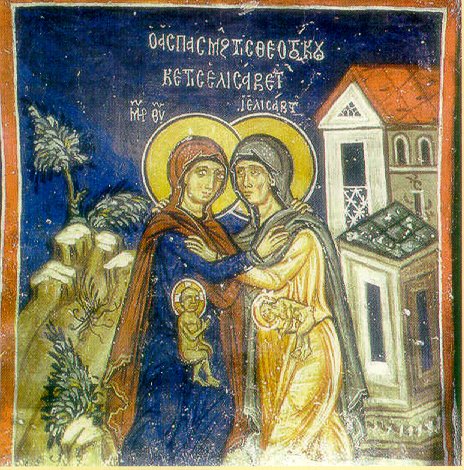
Unborn John honored Unborn Jesus by expressing joy at His Presence (Lk 1:44).
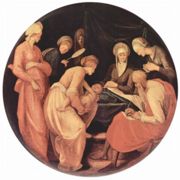
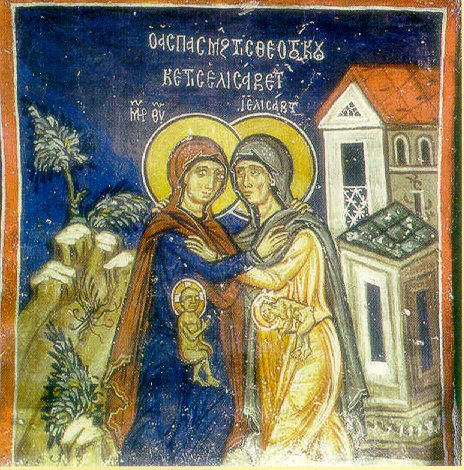
Elizabeth honored Unborn Jesus by recognizing Him and then blessing Him and His mother (Lk 1:42-43,45). Zechariah honored Unborn Jesus by blessing Him, testifying to Him and rejoicing in His mission of Salvation (Lk 1:67-79). Elizabeth & Zechariah together honored Unborn Jesus by welcoming Him and His mother into their home for three months (Lk 1:56).
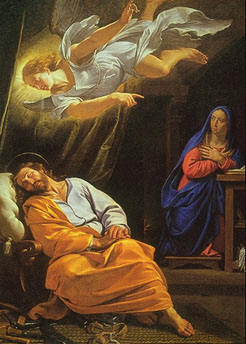
Joseph honored Unborn Jesus by welcoming Him and His mother into his home, by his obedience to the angel of the Lord, his doing God’s will, and especially by loving Unborn Jesus as his own Son (Mt 1:.24).
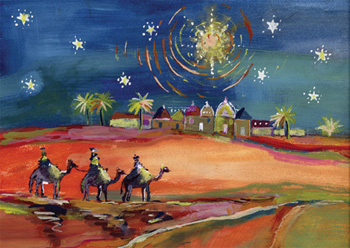
The 3 wise men honored Unborn Jesus from afar by seeking Him and searching for Him, passionately and diligently, and by rejoicing in anticipation (Mt 2:1-10).
How do we honor Unborn Jesus? Certainly, He wants us to honor Him through a loving acceptance of those unborn children entering our world today. But we can also honor Him by testifying to the great mystery of His Holy Infancy – even before His Birth, and we can bless Him, that is, praise Him in His Unborn Presence (just as we can praise Him in every stage of His life on earth and following His resurrection and Ascension). “Whoever receives one such child in my name receives me.” (Mt 18:5)
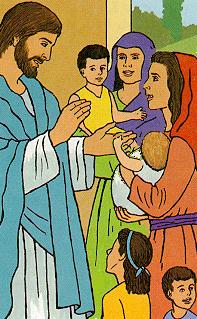
On one occasion, when Jesus was preaching the Gospel message as an adult, he encountered a lack of faith. He looked up to heaven and called out: “I thank thee, Father, Lord of heaven and earth, that thou hast hidden these things from the wise and understanding and revealed them to babes; yea, Father, for such was thy gracious will” (Mt 11:25 26). This time, he did not employ children but babies to illustrate His point. Jesus Himself points towards infancy.
Saint Josemaria Escriva once quipped in reference to “spiritual childhood”: “Be little, very little. Don’t be more than two years old, three at the most.” This half serious, half playful advice is thought provoking. There almost seems to be a progression here that suggests we not only become like children, but especially like “little” children, if not outright babies! And if trusting dependence upon God our Father is baby like, then why not become as trusting as unborn babies?
Unborn Jesus was content to dwell serenely within the womb of His mother for nine months, trusting in God the Father and relying on both for His needs. In this He serves as an example for us. (Just as thirty years later He slept quietly in a boat during a turbulent and terrifying storm, so these two images show us how Jesus trusted God the Father during the everyday events of life, as unborn baby and adult.) This trusting attitude was tied to His complete confidence in the will of God the Father.
Unborn Jesus had been entrusted to His mother as every other unborn child is. Truly, in every unborn child within the womb we witness the epitome of entrusting one life to another. And every unborn child should enjoy complete security and peace within the womb of his or her mother, just as Jesus did. As Pope John Paul II observed, “The God of the Covenant has entrusted the life of every individual to his or her fellow human beings, brothers and sisters, according to the law of reciprocity in giving and receiving, of self giving and the acceptance of others. In the fullness of time, by taking flesh and giving his life for us, the Son of God showed what heights and depths this law of reciprocity can reach.”
JUST 5 MORE PRAYING DAYS ‘TIL CHRIST’S BIRTH!
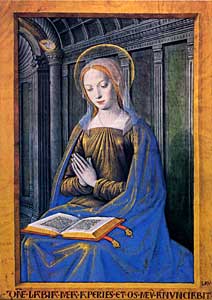
Our Lord’s first words ‑ uttered from the womb ‑ are not recorded in any of the Gospels, but in the book of Hebrews. The first act of Jesus Christ after His Incarnation is a prayer offering Himself and His human body to the Father:
Consequently, when Christ came into the world, he said,
“Sacrifices and offerings thou hast not desired,
but a body hast thou prepared for me;
in burnt offerings and sin offerings
thou hast taken no pleasure.
Then I said, “Lo, I have come to do Thy will, O God,’
as it is written of me in the roll of the book.” (Heb 10:5‑7) (see link on sidebar for further explanation)
These words (foretold in Psalm 40) ‑ are the only words known to be spoken by Unborn Jesus (or by any unborn child for that matter). Pope Paul VI referred to this prayer as “the fundamental offering that the Incarnate Word made to the Father when He entered the world”. The point here is that this prayer was not offered prior to the Incarnation but rather after it had occurred.
In her book Ortus Christi, Mother St. Paul links this fundamental offering of Christ to our prayer.
“What was the essence of His prayer (during those nine months)? What was it which lay behind all? It was the intention. And what was that? We have meditated on it many times: “Behold I come to do Thy Will O my God.”
Naturally there are many different ways of doing that Will, and many different degrees in the perfection with which it is done; and that is why we are quite safe in picturing to ourselves Jesus in the womb of His mother forgetting no single detail; or perhaps a truer picture would be a union with His Father so perfect that there was no need to talk about what was so evident.
Now let us apply this to myself and I will find that instead of being discouraging , it is most encouraging, instead of making my prayers harder it will make them far easier.
What is the intention in my prayers? Is it not to please God and to do His Will? …Now let me see how this works out in practice. I pay a visit to our Lord, perhaps I am too tired to think about Him, I may even sleep in His Presence; perhaps I am so busy that I find it impossible to keep away distracting thoughts…the time is up and I go, thinking, perhaps, what is the good of paying Him a visit like that?
There is great good even in that visit which all the same might have been so much more perfect. What was my intention in paying it? Certainly to please Him. Then I have pleased Him. It was a pleasure to Him to see me come in and sit with Him, even though I was occupied with my own concerns most of the time. We are too much taken up with asking how we say our prayers, but the important question is why do we say them.
To go and sit in His presence because He is lonely or because I am tired and I would rather sit with Him than anyone else is prayer even if I say nothing. What God is doing for me is of far more importance to my soul than what I am doing for God; and all the time that I am there, whether I am thinking of Him or not, He is impressing His image on my soul…”
JUST 14 MORE PRAYING DAYS ‘TIL CHRIST’S BIRTH!
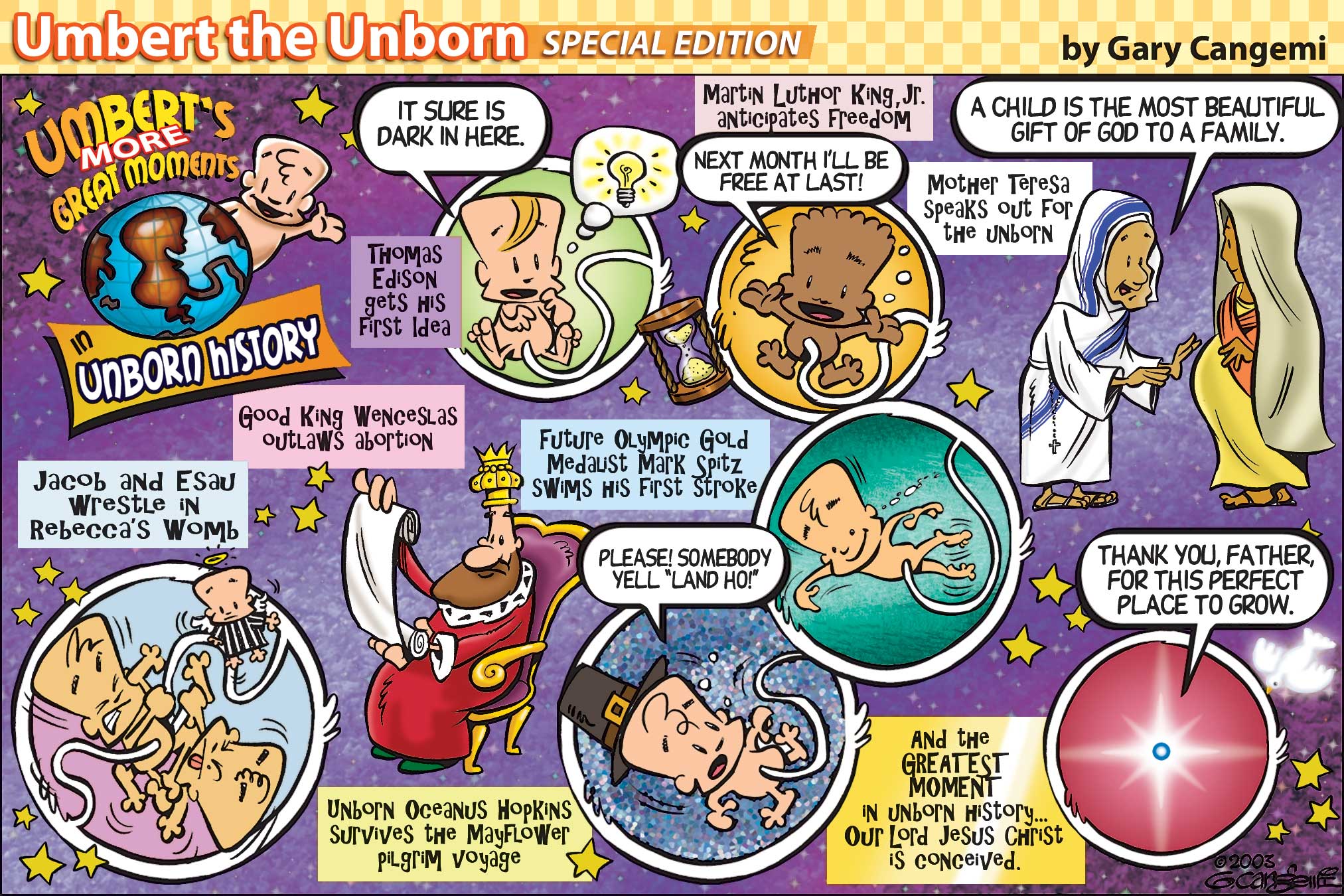
(POSTED WITH PERMISSION FROM THE ARTIST*)
Throughout human history there has only been one redemptive pregnancy. Eve’s first pregnancy, with Cain, was a prototypical pregnancy, but was not a redemptive pregnancy. When Abraham’s wife Sarah was pregnant with Isaac it was a pregnancy of promise and destiny, but not redemptive. When famous mothers or mothers of famous children were pregnant their pregnancies were perhaps remarkable or noteworthy, but not redemptive. And when your mother was pregnant with you, it was a very special pregnancy, but not redemptive. Only the pregnancy of Mary of Nazareth was, in every sense of the word, Redemptive: a pregnancy which Christians can discover by faith, and in our present age must discover.
Right from the start, and providentially so, the Incarnation and the redemptive pregnancy of Mary the mother of Unborn Jesus are filled with hope from on high. A hushed whisper of hope for undeserving humanity. Hope for every family. Hope for every mother. Hope for every unborn child.
Many unborn children today have few friends. Enter Unborn
Jesus, the best friend of each unborn child. Now that the unborn are fiercely persecuted and disdained, the first unborn child comes to be identified with them completely, in every possible way. And He calls out to the Church to be discovered, understood and loved. Does God love unborn children? Unborn Jesus answered that question for nine months and forever.
JUST 15 MORE PRAYING DAYS ‘TIL CHRIST’S BIRTH!
*We would like to thank Gary Cangemi for permitting us to use his wonderful cartoon.
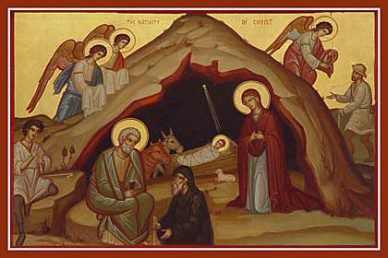
“God does not come in the thunder, but in the April breeze. Because he does not shout but only whispers, the soul must be careful not to neglect the visitation.” Archbishop Fulton Sheen, Lift Up Your Hearts.
When God first came to us it was in the most hidden, silent and ordinary way; first in his mother’s womb and then, as a baby in a manger. In the Old Testament God prepared His people for this hidden way.
“There shall come forth a shoot from the stump of Jesse, and a branch shall grow out of his roots.” Isaiah: 11: 1
“Therefore the Lord himself will give you this sign: the virgin shall be with child, and bear a son, and shall name him Immanuel.” Isaiah 7 13-14
“The LORD has created a new thing upon the earth: the woman must encompass the man with devotion.” Jeremiah 31:22
“But you, O Bethlehem Ephrathah, who are little to be among the clans of Judah, from you shall come forth for me one who is to be ruler in Israel, whose origin is from old, from ancient days…” Micah 5: 2
Recall also how the prophet Elijah sought God in a cave on Mount Horeb (I Kings 19:9‑13). God made Himself known to Elijah not in power and might, but rather in “a still small voice” which Elijah heard from within the cave. So, too, here in this Bethlehem cave, amidst the hushed prayers and whisperings of humans and angels alike, soon would come a little cry of newborn Divinity, muffled so as not to frighten any away – “a still small voice”.
Let us listen to the ‘whisper’ of Christ in the womb. Let us quiet ourselves so we can hear the still, small voice in the manger. It is in such quiet events that God normally speaks to us.
JUST 19 MORE PRAYING DAYS ‘TIL CHRIST’S BIRTH!
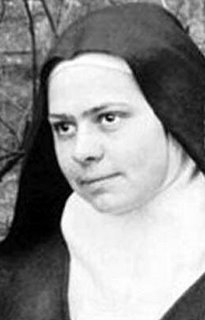
Today, November 8 is the feast day of Blessed Elizabeth of the Trinity (1880-1906). She has been called the Saint of the Divine Indwelling. In 1901 she entered the Carmelite order, receiving the name “Sister Elizabeth of the Trinity.” In his book Redeemer in the Womb, John Saward, points to her as one of three woman in the 20th century who emphasize the importance of Jesus’ life in the womb. (The other two are Caryll Houselander and Adrienne von Speyr.) Another lesser known woman who wrote extensively on this topic was Mother St. Paul.
Here is a quote from Blessed Elizabeth:
“It seems to me that the attitude of the Virgin during the months between the Annunciation and the Nativity is the model for interior souls, for those whom God has chosen to live inwardly, in the depths of the unfathomable abyss.” From Le Ciel dans la foi.
She elaborates in a letter to her sister, Guite (Oeuvres completes):
“Think what must have been going on in the Virgin’s soul after the Incarnation, when she possessed within her the Word incarnate, the Gift of God…In what silence, what recollection, what adoration she must have buried herself in the depths of her soul to embrace this God whose Mother she was. My little Guite, he is in us. O let us stay close to him in this silence, with this love, of the Virgin. This is the way to spend Advent, isn’t it?”
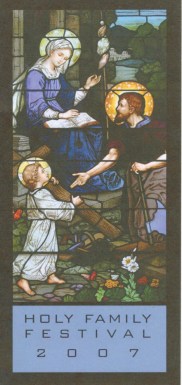
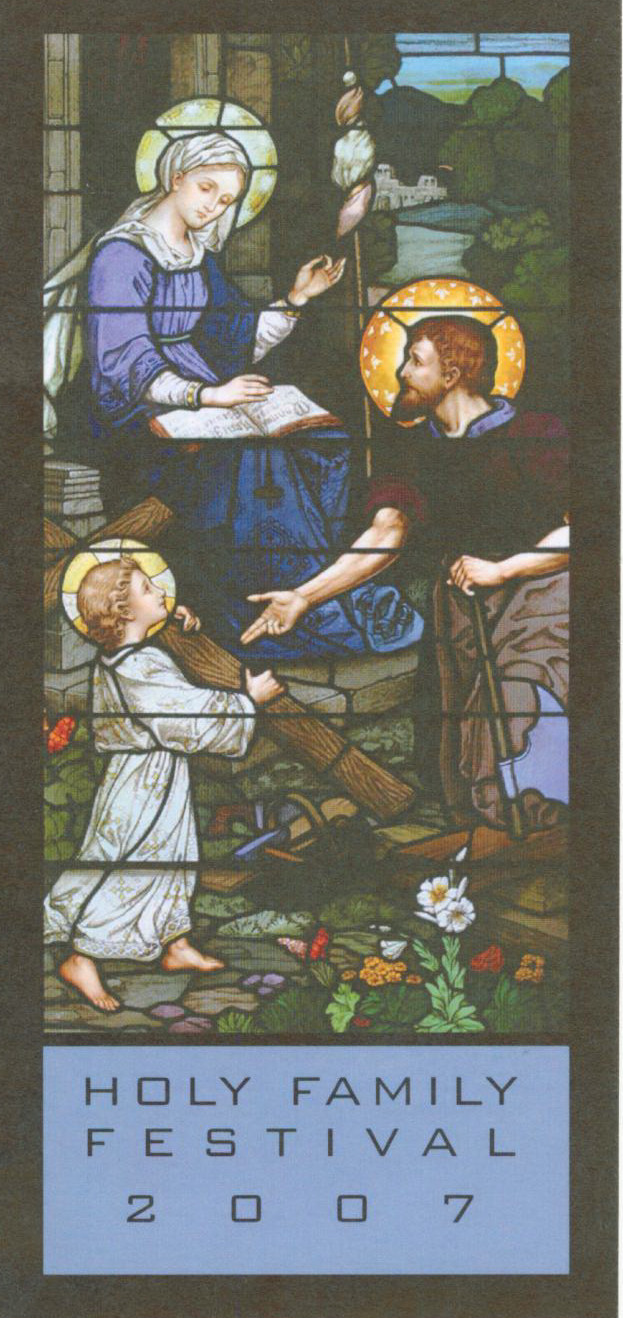
This weekend we attended the Holy Family Festival in Ojai. They had a wonderful speaker from Catholic Answers, Tim Staples, who gave two talks on “The Immaculate Conception and the Dignity of Man”. Tim Staples is a fabulous speaker and I would recommend him highly for both adults and teenagers.
At the end of the day, we were fortunate enough to get to speak with Tim and his lovely wife, Valerie. Tim brought up an interesting scripture about Mary and referenced St. Jerome’s interpretation of it. We were surprised because we weren’t aware of this passage about Mary’s pregnancy and the Unborn Christ Child.
“The LORD has created a new thing upon the earth: the woman must encompass the man with devotion.” Jeremiah 31:22
St. Jerome in his commentary on this verse understood it of Mary’s virginal conception of Christ. “The LORD has created a new thing on earth; without seed of man, without carnal union and conception, ‘a woman will encompass a man’ within her womb – One who, though He will later appear to advance in wisdom and age through the stages of infancy and childhood, yet, while confined for the usual number of months in his mother’s womb, will already be perfect man.” USCCB New American Bible Footnote 3 Point C

Today, October 16 is the feast day of St. Margaret Mary who was the Apostle of the Sacred Heart of Jesus. (Mt 11:28-30)
Pope Pius XI in his Encyclical on Reparation To the Sacred Heart, (#2) explained how this devotion helped end the heresy of that time, Jansenism.
“As formerly Divine Goodness wished to exhibit to the human race, as it came from the Ark of Noe, a sign of the renewed covenant between them . . . so in our own troubled times, while that heresy held sway which is known as Jansenism, the most insidious of all heresies, enemy of the love of God and of filial affection for Him – for this heresy preached that God was not so much to be loved by us as a Father as to be feared as an unrelenting Judge – the most kind Jesus manifested to the nations His Sacred Heart .”
Today we need God’s love and help in fighting the most insidious heresy of our time – abortion. That is why Unborn Word of the day is dedicated to honoring the Unborn Christ Child. By honoring the 9 months Christ spent in Mary’s womb we want to show God’s love for and solidarity with each unborn child.
Because He completely identifies with all unborn children, indeed is one of them, when we lift up and exalt Unborn Jesus, in a real sense we lift up all unborn children with Him. Him we honor as God, they we honor as children created in His image and likeness, and for His glory.
We believe that just as the devotion to the Sacred Heard helped end the heresy of Jansensim – devotion to the Unborn Christ Child can help end abortion.
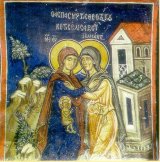
In his prophetic encyclical letter THE GOSPEL OF LIFE, John Paul II makes it simple and clear in the following comment:
“The Gospel of Life is something concrete and personal, for it consists in the proclamation of the very person of Jesus…Through the words, the actions and the very person of Jesus, man is given the possibility of ‘knowing’ the complete truth concerning the value of human life.” # 29.
UNBORN WORD ALLIANCE is committed to reflecting upon “the words (Heb 10:5-7), the actions and the very person of (Unborn) Jesus” through its diverse activities: the book Unborn Jesus Our Hope, the Litany of the Unborn Christ Child prayer card (English & Spanish), our website UnbornWordAlliance.com, our blog UNBORNWORD of the day and speaking engagements. To see prayer cards click on the box.
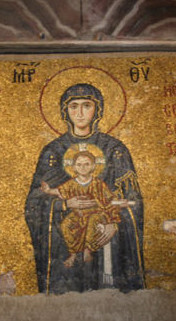
October 7th is traditionally the feast day of Our Lady of the Rosary. Following are a few comments about the “Hail Mary” prayer repeated throughout the rosary.
On our website we have the words to the “Hail Mary” prayer visually formatted to demonstrate the simple reality that the prayer is Christ-centered. At the center of the prayer is one word: JESUS. But it is introduced with these words: “Blessed is the fruit of thy womb…Jesus”. These words, taken from the Gospel of Luke (Lk 1:42), are the words Elizabeth speaks to Mary immediately after her unborn baby John the Baptist leaps in her womb due to the arrival and Presence of Unborn Jesus (in Mary’s womb).
The entire “Hail Mary” prayer revolves around Unborn Jesus! Yet, the prayer, like the life of Jesus, is expansive and inclusive, that is, it points to all of the other realities and experiences of Jesus during His life on this earth. His birth, childhood, public ministry, Passion and death, resurrection, ascension into Heaven are all naturally drawn into the simple message of this prayer: “Blessed is the fruit of thy womb JESUS!”
The word JESUS, is perhaps subtle in this prayer, subtle like an unborn baby in the early months of pregnancy. But the other words of the prayer are anchored by this one word. Like spokes emanating outward from the hub of a wheel, the words of the “Hail Mary” go outward from their quiet centerpoint, the word, the Person: JESUS.
And this is precisely the way Mary would want it. Her comment many years later at Cana “Do whatever He tells you” (Jn 2:5) is comparable to the famous comment by John the Baptist: “He must increase, but I must decrease” (Jn 3:30). Mary does not compete for our attention; no, she simply loves her child, the fruit of her womb, and offers Him, to you, in His meekness, His vulnerability, not as Eve offered forbidden fruit, but lovingly as the one necessary fruit for your salvation and happiness. You can reach out to her and accept this fruit: her baby JESUS, her savior JESUS.
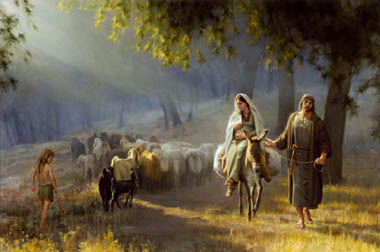
I didn’t realize it before, but apparently there are two litanies to “Our Lady of Lourdes”. I would like to comment on a few lines from what is probably the older litany. There are actually three lines in sequence which read as follows:
Mother poor and without shelter, PRAY FOR US*
Mother who did bear along forgotten roads the fruit of thy womb, *
Who did find no other shelter for thy Son and thy God than a wild cave,
and no other cradle than a manger, *
It is the second line above which caught my attention, but it is placed in perspective by the lines immediately preceding and following it. The third line speaks about our Lord’s birth at Bethlehem, so the second line is probably referring to the days of Mary’s pregnancy and perhaps the period of time as she made her way there.
She carried her unborn baby Jesus “along forgotten roads” as all expectant mothers do. In her case, we think of the road from Nazareth to the hill country of Judea – probably to the town of Ain-Karim – where her cousin Elizabeth lived with her husband the priest Zechariah. This town is near Jerusalem so Mary would have probably gone to Jerusalem a number of times during her three month visit. Then she returned to Nazareth and spent another four or five months there. But occasionally she would be out on the nearby roads to visit someone or obtain some item.
Finally there is the journey to Bethlehem when Mary is perhaps in her eighth month of pregnancy. God Incarnate and unborn left His mark on the roads of Israel, vicariously through the footsteps of Mary as she did the Will of God. Later John the Baptist would “make straight in the desert a highway for our God” (Isa 40:3), preparing the way of the Lord. But, in her own way Mary tried to make His way comfortable and safe, bearing Him with love and devotion even before the day of His birth. “How beautiful upon the mountains are the feet of (her) who brings good news” (Isa 52:7).
For Mary, for all pregnant women – and for all unborn babies – all these roads lead to Bethlehem.
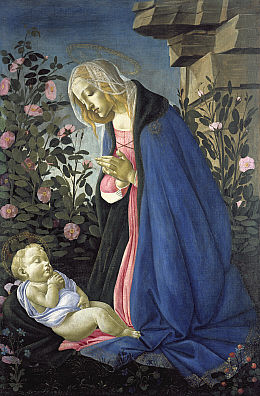
The Virgin Adoring the Sleeping Christ Child by Sandro Botticelli
The unique St. John Eudes wrote many diverse prayers during his lifetime demonstrating his desire to offer every action of each day to God in a special and meaningful way. This is reflected in prayers such as this:
“O Jesus, I offer Thee the rest I am about to take, in honor of the eternal rest Thou dost enjoy in the bosom of Thy Father, and in honor of the sleep and temporal rest Thou didst take in the bosom of Thy Mother, as well as during Thy whole life on earth.”
His reference to the “bosom of Thy Mother”, is an endearing term for the womb of Mary as we see in the following instruction he gave elsewhere to retreatants:
“Your retreat ought to be made with these chief ends in view: 1. To continue and honor the various retreats of Jesus, for example, His retreat from all eternity in the bosom of His Father; His retreat for nine months in the bosom of His Mother…”
During his times of rest, sleep and even retreat John Eudes was reminded of Unborn Jesus within Mary’s womb. As he instructs us above, we can honor these acts of Jesus to the extent that we join ourselves to Him with these mysteries of His Presence in mind.
Quotes taken from: St. John Eudes, C.J.M., The Life and the Kingdom of Jesus in Christian Souls
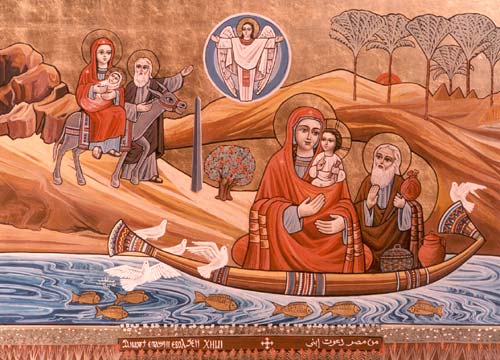
Today is the feastday of St. Matthew. St Matthew (Apostle and Evangelist) is the author of the first Gospel. It is in the Gospel of Matthew that we have the most complete account of St. Joseph’s calling to be the adoptive father of Jesus.
Here is a quote from Pope Benedict’s Angelus address on 12/18/2005:
“In these days of Advent, the liturgy invites us to contemplate in a special way the Virgin Mary and St. Joseph, who lived with a unique intensity the time of waiting and preparation for the birth of Jesus. Today, I want to direct our gaze toward the figure of St. Joseph… The one who gives the most importance to the adoptive father of Jesus is the Evangelist Matthew, emphasizing that thanks to him, the Child was legally introduced into the lineage of David fulfilling the Scriptures, in which the Messiah was prophesied as the ‘son of David’.”
It seems that adoption was part of God’s plan: Here is an excerpt from Unborn Jesus Our Hope:
“From a legal and social point of view, Joseph would be recognized as the father of the baby Jesus. According to the Israelite understanding of marriage in those days, a child conceived during the time of betrothal was a “legitimate” child, and the reputations of both mother and child were thus protected. “Joseph’s adoption of Jesus is effected in the two acts with which the account (Mt 1:24 25) closes, and which are in fact its most essential elements. ‘He took his wife…. And he called his name Jesus.’” (Jean Cardinal Daniélou, The Infancy Narratives) This constitutes a turning point in the life of Unborn Jesus. His earthly father reaches out to Him, figuratively embracing Him with wholehearted acceptance.
The relationship between Joseph and Unborn Jesus becomes very real. Fr. Faber states that Joseph was “part of the scheme of redemption” and “assists God in keeping the mystery of the Incarnation a secret”. (Rev. Frederick W. Faber, C.O., D.D., The Blessed Sacrament) Joseph begins a secret “adoption” process while Jesus is yet an unborn child (“he took his wife” and her unborn child) and then the process is later completed with Joseph’s naming of the child after birth and registering the child in Bethlehem during the census. Jesus needed to be accepted into a family, adopted into a family, and there existed a vacuum until that day when Joseph stepped forward in obedient faith to lovingly accept his son: “Joseph is the one whom God chose to be the ‘overseer of the Lord’s birth’, the one who has the responsibility to look after the Son of God’s ‘ordained’ entry into the world, in accordance with divine dispositions and human laws.” (Pope John Paul II, Apostolic Exhortation Guardian of the Redeemer)

The following beautiful and poetic reflection about Jesus is taken from St. Francis de Sales book On the love of God.
“He took a loving quiet in us, yea even with some suspension of his senses, in his mother’s womb and in his infancy.
And he of whom it is so frequently
written: I live, saith the Lord; could afterwards have said according to His apostle’s language:
I live, now not I, but man liveth in me.
To me to live is man, and to die for man is gain.
My life is hidden with man in God.
He who dwelt in himself dwells now in us, and
He who was living from all eternity in the bosom of his Eternal Father becomes mortal in the (womb) of his temporal Mother;
He who lived eternally by his own divine life, lived with a human life,
He who from eternity had been only God,
shall be for all eternity man too:
So has the love of man ravished God, and drawn him into an ecstasy!”
When I read this I think how much Jesus identifies with all of us and how much He loves the little unborn and newborn babies. After all: “He took a loving quiet in us, yea even…in his mother’s womb.”
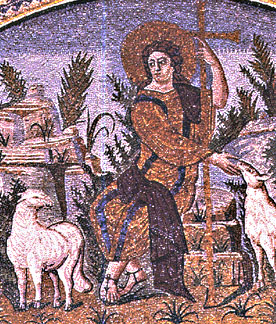
Below is a quote from St. Francis de Sales. Here he takes a quote from the beautiful Song of Songs and interprets it for us – he sees the Unborn Christ Child in this verse:
The divine lover like a shepherd, and indeed he is one, prepared a sumptuous banquet according to the country fashion for his sacred spouse, which he so described that mystically it represented all the mysteries of man’s redemption.
‘I am come into my garden, said he, O my sister, my spouse, I have gathered my myrrh, with aromatical spices; I have eaten the honey-comb with my honey, I have drunk my wine with my milk; eat, O friends, and drink, and be inebriated, my dearly beloved!’ (Song of Songs 5:1)
Ah! when was it, I pray you, that our Saviour came into his garden, if not when he came into his mother’s purest, humblest and sweetest womb, replenished with all the flourishing plants of holy virtues? And what is meant by our Saviour’s gathering his myrrh with his perfumes, except that he joined suffering to suffering until death, even the death of the cross, heaping by that means merit upon merit and treasures upon treasures, to enrich his spiritual children? And how did he eat his honey-comb with his honey, but when he lived a new life, reuniting his soul, more sweet than honey, to his pierced and wounded body, with more holes than a honeycomb? And when ascending into heaven he took possession of all the surroundings and dependencies of his divine glory, what other thing did he if not mix the exhilarating wine of the essential glory of his soul, with the delightful milk of the perfect felicity of his body, in a more excellent manner than hitherto he had done?
Treatise on the Love of God by St. Francis de Sales, (1567-1622).
 UNBORN WORD of the day