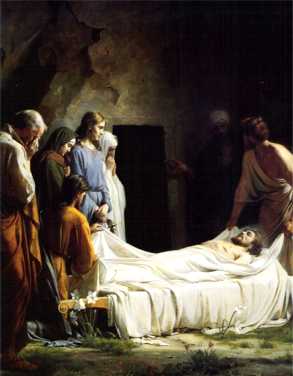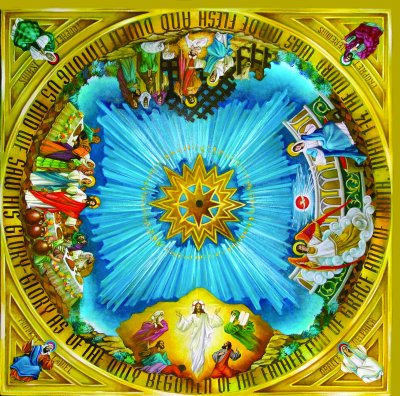
Today is the feast day of St. Robert Bellarmine. On the Canadian Catholic Conference of Bishops website they have a beautiful quote from St. Robert about the Incarnation.
So be still now, o my soul, and just listen to the way St. Robert Bellarmine compares the Incarnation to a marriage!
“The king is God the Father; the son is the Word of God; the marriage is the Incarnation; and the bride is human nature. It is most appropriate, indeed, that the Incarnation is compared to a marriage!
First, before a marriage is contracted, there is a time of courtship and engagement: hence the declaration of divine love, celebrated by the wise Solomon in his nuptial poem, the Song of Songs, and the solemn promise made by God to the patriarchs and the prophets that the nuptials would take place.
A marriage also requires mutual consent: this took place when God, through the angel Gabriel, voiced his Son’s intention to Mary, and she, the mother of the bride-to-be [the human race], answered for her daughter: ‘Behold the handmaid of the Lord; let it be with me according to your word’ (Lk 1:38).
The marriage is then consummated, whereby in all truth the two become one flesh-two natures so intimately united in one person that, unlike other marriages, not even death itself could long separate them.
And once a marriage has taken place, the couple hold everything in common: what had hitherto belonged to the Word-his unique titles, honors, and special privileges-are now bestowed on his bride; and similarly everything that belonged to human nature-its needs, aspirations, weaknesses and sufferings-is assumed by the bridegroom. Even more, a definite new relationship and familiarity begin to exist between the relatives and friends of the bride and groom: that happy intercourse between heaven and earth, which is called the “communion of saints”.
And finally, the traditional ends of marriage are also apparent in the Incarnation. Rightly, therefore, is this union called a marriage which the King of kings made for his divine Son.” (St. Robert Bellarmine)
Prayer
Listen kindly to my prayer, Lord God.
Help me to appreciate more fully the awesome beauty of this great mystery, the Incarnation, and so come to know the depth of your everlasting love. Give me an eye with which to recognize your beloved Incarnate Son; an ear that can understand his word; a heart like unto his; and teach me to ever place my hand trustingly in his.
Taken from The Canadian Catholic Conference of Bishops
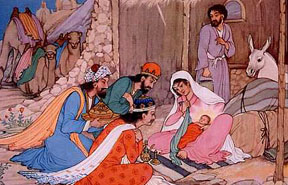
The Gospel of Matthew tells us about the “wise men from the East”. They really had only one objective for their long journey. If their journey could be compared to a race, then Bethlehem was the finish line, but what was the prize? In fact, when they set out they didn’t know where the finish line was either. Wise men on a Mission!
So when they arrived in Jerusalem, they were saying to various people: “Where is he who has been born king of the Jews? For we have seen his star in the East, and have come to worship him” (Mt 2:1-12).
The Infant King of the Jews was the prize they sought. To see Him and worship Him! These wise men were prepared for the realization of their objective. So when they finally found “the child with Mary his mother”, what did they do? “They fell down and worshipped him“. If this had been a test of some kind – they passed with flying colors!
It is interesting that they fell down – physically, probably kneeling in holy reverence – and that the infant was “with Mary his mother”. So is it possible that someone looking from a distance might wonder whether they were worshipping the infant or the mother or both? This is the criticism sometimes leveled at Catholics. Do they worship Mary the mother of Jesus? Of course not! By virtue of her Divinely determined maternal role, Mary is always close to Jesus Christ her Son. But she is always distinct from Him. He is God, she is human. But Matthew presents the Infant King of the Jews “with Mary his mother” because the Infant King needed His mother – He would have been lost without her! On earth, when He was a small child, she was His heaven. This shows us how much the Father trusted Mary to be the best of mothers to the Father’s only begotten Son.)
Of course, these wise men are remembered primarily for what they did next: “Then, opening their treasures, they offered him gifts, gold and frankincense and myrrh.” But this lavish gift-giving was part of their worship! We mustn’t separate their worship from their gift-giving. First came the worship, then the gift-giving. The worship established the context, the gift-giving was an extension of the worship, part of the worship. Worship of God is the heartbeat of the Church, and refreshment to the spiritual life.

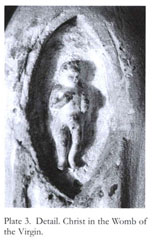
15th Century Visitation sculpture from Passau. As is customary in later representations of the Visitation, Mary and Elizabeth embrace, appearing as mirror images of one another, their unborn children, Christ and John the Baptist, can be seen in the mandoria-shaped hollows of their mother’s wombs. (see detail of Christ in the womb below)
I have a Catholic hero who 99.99% of Catholics have never heard of. I have lots of heroes, but this person is particularly distinguished for several reasons, one of which is that she has faded into utter obscurity – as most of us will do. But more importantly, she developed her own great devotion to the Unborn Christ Child back in the early 1920’s and 1930’s and wrote two outstanding books about Christ: Nativitas Christi and Ortus Christi. (No doubt her devotion to the unborn Christ was derived from the spirituality and writings of the French School of Spirituality founded centuries earlier.)
At the conclusion of this reflection I will quote one sentence from Ortus Christi, in which she turns to the Unborn Christ Child within Mary’s womb and prays.
“It is I who by my great power and my outstretched arm have made the earth…” Jer 27:5
“O Lord God of hosts, who is mighty as thou art, O Lord…Thou hast a mighty arm; strong is thy hand, high thy right hand.” Psalm 89:8,13
“And the Lord will cause his majestic voice to be heard and the descending blow of his arm to be seen…” Isaiah 30:30
“The Lord has sworn by his right hand and by his mighty arm…” Isaiah 62:8
But the arm of the Lord is also associated with deliverance, as when He delivered the people of Israel from bondage in Egypt: “I will deliver you from their bondage, and I will redeem you with an outstretched arm…” Ex 6:6
Finally, the prophet Isaiah associates the arm of the Lord with the youthful Messiah Savior: “Who has believed what we have heard? And to whom has the arm of the Lord been revealed? For he grew up before him like a young plant…” Isaiah 53:1-2
The arm of the Lord was revealed to us as a saving arm, bringing salvation through Jesus. So, even in the womb, the tiny unborn Savior’s arm represented the arm and hand of God reaching out to humanity to heal and save!
So, Mother St. Paul – a pro-life hero from the 1920’s and 1930’s – reflects on the mission of Moses and then on Isaiah’s words: “A little Child shall lead them” (Isa 11:6), then she prays to the Unborn Lord: “Oh! Come, little Saviour, come and redeem us by Thy outstretched Arm!” How humanly weak that unborn arm, yet how powerful its redemptive blessings. We too can turn to the Unborn Christ Child and beg Him to outstretch His tiny arm and work pro-life miracles in our own day.
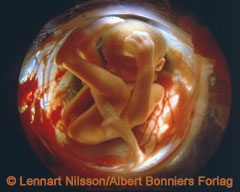
Unborn Christ with His arm outstretched
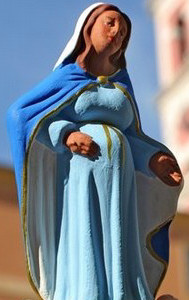
A ‘santon’ of a pregnant Virgin Mary, is seen in Nice, southern France, Friday, Dec. 22, 2006. Santons are traditional colored figurines usually set in Christmas Nativity scenes. This santon, designed by Christmas figurine maker, France‘s Dominique Coulomb of Aubagne, will be replaced by a post natal Virgin Mary at midnight on Dec. 24, Christmas Eve. (AP Photo/Lionel Cironneau)
Pope Paul VI was born September 26, 1897 and died August 6, 1978. In his Apostolic Exhortation on Mary he points to the wonderful example of faith and prayer that Mary gave to all Christians when she conceived and carried Jesus in her womb. Let us have faith like Mary, that God wills that the children of our time have their right to life respected, and like Mary let us prayerfully exalt in the mercy and power of God.
- Mary is the attentive Virgin, who receives the word of God with faith, that faith which in her case was the gateway and path to divine motherhood, for, as Saint Augustine realized, “Blessed Mary by believing conceived Him (Jesus) whom believing she brought forth.”
- In fact, when she received from the angel the answer to her doubt (cf. Lk. 1:34-37), “full of faith, and conceiving Christ in her mind before conceiving Him in her womb, she said, ‘I am the handmaid of the Lord, let what you have said be done to me’ (Lk. 1:38).”
- It was faith that was for her the cause of blessedness and certainty in the fulfillment of her promise: “Blessed is she who believed that the promise made her by the Lord would be fulfilled” (Lk. 1:45).
- Similarly, it was faith with which she, who played a part in the Incarnation and was a unique witness to it, thinking back on the events of the infancy of Christ, meditated upon these events in her heart (cf. Lk. 2:19,51).
- Mary is also the Virgin in prayer. She appears as such in the visit to the mother of the precursor, when she pours out her soul in expressions glorifying God, and expressions of humility, faith and hope.
- This prayer is the Magnificat (cf. Lk. 1:46-55), Mary’s prayer par excellence, the song of the messianic times in which there mingles the joy of the ancient and the new Israel. As St. Irenaeus seems to suggest, it is in Mary’s canticle that there was heard once more the rejoicing of Abraham who foresaw the Messiah (cf. Jn. 8:56 Abraham your father rejoiced to see my day; he saw it and was glad.)
- “In her exultation Mary prophetically declared in the name of the Church: ‘My soul proclaims the glory of the Lord….’ And in fact Mary’s hymn has spread far and wide and has become the prayer of the whole Church in all ages.
FOR THE RIGHT ORDERING AND DEVELOPMENT
OF DEVOTION TO THE BLESSED VIRGIN MARY
February 2, 1974 taken from sections 17 and 18.
Filed under: Mary, Quotes from Great Christians, The Incarnation, Unborn Jesus
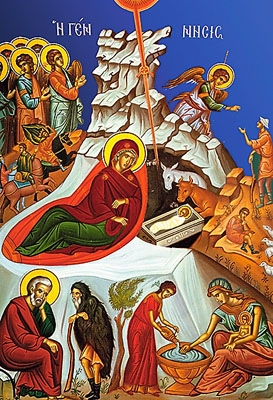

“Humanly speaking, the time of Advent must have been the happiest time of Our Lady’s life. The world about her must have been informed with more than its habitual loveliness, for she was gathering it all for the making of Her Son…
It must have been a season of joy, and she must have longed for His birth, but at the same time she knew that every step that she took, took her little Son nearer to the grave.
Each work of her hands prepared His hands a little more for the nails; each breath that she drew counted one more to His last.
In giving life to Him, she was giving Him death.
All other children born must inevitably die; death belongs to fallen nature; the mother’s gift to the child is life.
But Christ IS life; death did not belong to Him.
In fact, unless Mary would give Him death, He could not die.
Unless she would give Him the capacity for suffering, He could not suffer.
He could only feel cold and hunger and thirst if she gave Him HER vulnerability to cold and hunger and thirst.
He could not know the indifference of friends or treachery or bitterness of being betrayed unless she gave Him a human mind and a human heart.
That is what it meant to Mary to give human nature to God.
He was invulnerable; He asked her for a body to be wounded.
He was joy itself; He asked her to make Him a man.
He asked for hands and feet to be nailed.
He asked for flesh to be scourged.
He asked for blood to be shed.
He asked for a heart to be broken.
The stable at Bethlehem was the first Calvary.
The wooden manger was the first cross.
The swaddling bands were the first burial bands.
The passion had begun.
Christ was man.
This, too, was the first separation.
This was her Son, but now He was outside of her: He had a separate heart: He looked at the world with the blind blue eyes of a baby, but they were His own eyes.
The description of His birth in the Gospel does not say that she held Him in her arms but that she “wrapped Him up in swaddling clothes and laid Him in a manger”.
As if her first act was to lay Him on the cross.
She knew that this little Son of hers was God’s Son and that God had not given Him to her for herself alone, but for the whole world.”
A meditation by Caryll Houselander from “The Reed of God”.
One of the subscribers to the e-newsletter sent this beautiful meditation to us. Thanks Diana.
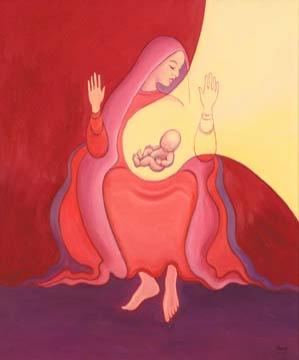
Mary is the ‘Holy House’ who bore God in her womb and is forever to be honoured by Elizabeth Want
In his Apostolic Exhortaion entitled Vita Consecrata (March 25, 1996) John Paul II has a thought provoking quote from St. Augustine:
“Beautiful is God, the Word with God … He is beautiful in heaven, beautiful on earth; beautiful in the womb, beautiful in his parents’ arms, beautiful in his miracles, beautiful in his sufferings; beautiful in inviting to life, beautiful in not worrying about death, beautiful in giving up his life and beautiful in taking it up again; he is beautiful on the Cross, beautiful in the tomb, beautiful in heaven. Listen to the song with understanding, and let not the weakness of the flesh distract your eyes from the splendour of his beauty.” #24

‘Fantastic Ruins with Saint Augustine and the Child’ François de NOME,
about 1593 – after 1630
In a vision Saint Augustine saw a child trying to empty the sea into a hole dug in the sand; when Augustine told him that this was impossible, the child replied that Augustine was engaged on the equally impossible task of explaining the Trinity.
Many have assumed that the child St. Augustine saw in his vision was the Christ Child – Below is a beautiful passage on the Incarnation from a sermon given by St. Augustine:
“He by whom all things were made was made one of all things. The Son of God by the Father without a mother became the Son of man by a mother without a father. The Word Who is God before all time became flesh at the appointed time. The maker of the sun was made under the sun. He Who fills the world lays in a manger, great in the form of God but tiny in the form of a servant; this was in such a way that neither was His greatness diminished by His tininess, nor was His tininess overcome by His greatness.”(St. Augustine, Sermon 187)
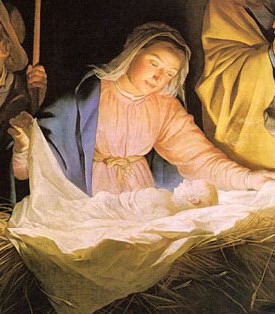
Christ is the hope of the pro-life movement. Pope Benedict reminded us at Midnight Mass on December 24 , 2006 that hope for the pro-life movement can be drawn from the saving work of Jesus Christ – even his saving work as an infant.
“The child of Bethlehem directs our gaze towards all children who suffer and are abused in the world, the born and the unborn…. In all of these it is the Child of Bethlehem who is crying out to us; it is the God who has become small who appeals to us…”
“God has become one of us, so that we can be with him and become like him. As a sign, he chose the Child lying in the manger: this is how God is. This is how we come to know him. And on every child shines something of the splendor of that “today”, of that closeness of God which we ought to love and to which we must yield – it shines on every child, even on those still unborn.” Pope Benedict XVI – Midnight Mass Homily – Christmas Eve 2006.

Father Faber once said of the Annunciation:
“The Annunciation is the hardest feast in the year to keep as it should be kept.” Fr. F.W. Faber, The Blessed Sacrament
One website called the Day of the Unborn Child is trying to encourage Christians to celebrate this feast day in a more profound and significant way. Here is how they describe what they are about:
“This site was developed to advance the movement toward international recognition of March 25th as the “Day of The Unborn Child,” and equally to promote among Christians the observance of this traditional feast day of the Incarnation honoring Christ’s conception which is currently named ‘The Feast of the Annunciation.’ “
This website is really informative – Some of the topics that you will find are:
Ideas for celebrating the feast
Fascinating facts about this feast
Historical Background on the feast
Worship Resources
Further Reading and Instructional Materials
They also will send you free prayer cards. They are really beautiful cards – I requested them about a year ago.
To see these and more topics click here.
This website also calls our attention to the fact that over the past 15 years there has been a movement to celebrate the Feast of the Annunciation, March 25 as the Day of the Unborn.
Quite a few countries especially in Central and South America have had this day officially recognized as the Day of the Unborn or are working towards this goal. Here is a partial list of these countries:
El Salvador, Argentina, Brazil, Chile, Ecuador, Guatemala, Nicaragua, Uruguay, Paraguay and The Philippines
Click here to see an article on the Hawaii Right to Life website which provides other details about this movement. The Knights of Columbus also encourage the celebration of Day of the Unborn Child on the feast of the Annunciation. Because March 25th falls on Easter Tuesday – the Annunciation will be celebrated on March 31 this year.
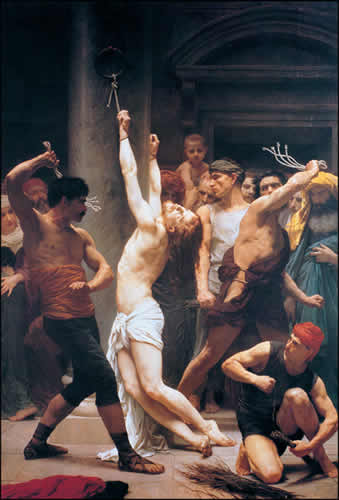
“Consequently, when Christ came into the world, he said,
‘Sacrifices and offerings thou hast not desired
but a body hast thou prepared for me…‘” Heb 10:5
We have mentioned previously (Hebrews 10: 5-7) that Christ spoke these and other words (verses 6-7) immediately upon entering the world – that is, at the one cell stage of His life. So that first cell of His existence was that body prepared for Him. And during the first nine months in the womb, in a special way, His body was being formed for that one acceptable sacrifice that would occur more than thirty years hence.
We invite you now to consider, in a most unique way, the offering of Jesus Christ – beginning in the Garden of Gethsemane and continuing on until His death upon the cross – but considered from the perspective of His body being formed and prepared within the womb for those events which would occur more than 30 years later.
Consider the crucifixion in this light. The blood which will be shed in this sacrifice began to course through His body about eight months before His birth and would continue to run freely until that final offering. Likewise, every physical feature of our Lord’s body, while forming in the womb, took on its own predestined sacrificial character, a character that would be eternally stamped upon it during His Passion and death:
First His Heart begins a spiritual bleeding in the
Garden of Gethsemane and he is “sorrowful, even
to death”. (Mk.14.34)
He gets on His knees in a prayer agony. (Lk.22.41)
He falls upon His face, in the dark, in the dirt, alone.
(Mt.26.39)
Now sweat as great drops of blood fell from His face
and head. His Heart’s spiritual bleeding is too
intense for this Body, so the Body begins to bleed itself.
(Lk.22.44)
He now receives a kiss upon His cheek and a feigned
embrace from His onetime friend Judas. (Mt.26.49)
He is forcefully seized. (Mt.26.50)
His hands are tied and He is led like a lamb to slaughter.
(Jn.18.12)
Now His face is struck because of the response He gave
to Annas, the father in law of Caiaphas the High Priest.
(Jn.18.13,22)
Wrists still bound, He is led to the home of Caiaphas.
(Jn.18.24)
They spit in His face as the interrogation begins, perhaps
because He is standing erect, head still held high.
(Mt.26.67)
They cover His face (Mk.14.65) to blindfold His eyes.
(Lk.22.64)
His face is slapped and struck and He is now the subject
of a game. “Prophesy to us, you Christ! Who is it that
struck you?” (Mt.26.67) His very Identity is mocked.
He is received with blows by Caiaphas’ guards, perhaps
as He walks past them. (Mk.14.65)
The next morning He is led to the Council, perhaps
like an animal with a cord around His waist or neck.
(Lk.22.66)
From the Council He is led to Pilate and then sent to
Herod. Herod’s soldiers ridicule Jesus and clothe Him
in a costume. (Lk.23.11)
Our Lord’s back is scourged by order of Pilate.
(Jn.19.1)
He is stripped of the costume and a robe is again
put on Him. (Mt.27.28,Jn.19.2)
On His head a crown of thorns is placed, causing rivulets
of blood to trickle from His scalp down His forehead
and down the back of His neck. (Jn.19.2)
In His hands they mockingly place a reed to represent
a royal scepter. (Mt.27.29)
Now the soldiers spit on Him and take the reed back and
hit Him with it. (Mt.27.30)
And they continue to strike Him with their hands as well.
(Jn.19.3)
He is given the large wooden cross to carry. (Jn.19.17)
Its rough abrasive weight upon His recently scourged
back.
He has trouble carrying the cross (Simon of Cyrene is
therefore forced to help; Lk.23.26) Tradition tells us
that Jesus fell three times as He carried the cross.
(Reference: the Stations of the Cross)
At Golgotha they strip Him and nail His
hands and feet to the cross. (Lk.23.33 34)
Aching, exhausted, bruised, bleeding, weary of dying,
Christ hangs on the cross, resembling more a slaughtered
animal than a man in the final stage of dying.
(Ps.22.6,14 15)
He is offered sour vinegar to drink, probably extended
on a saturated sponge on a stick and placed against His
lips; all in jest. (Lk.23.36)
Finally, a spear is thrown into His side. (Jn.19.34)
Probably penetrating His Heart, causing the issuance
of “blood and water“.
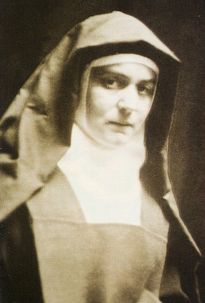
Here is a quote from Saint Teresa Benedicta of the Cross (Edith Stein)
” ‘He saw the holy city, the new Jerusalem, descending out of heaven from God, prepared like a bride adorned for her husband’ (Rv 21:2 and 9ff.). As Christ himself descended to earth from heaven, so too his Bride, the holy church, originated in heaven. She is born of the grace of God, indeed descended with the Son of God himself; she is inextricably bound to him. She is built of living stones; her cornerstone was laid when the Word of God assumed our human nature in the womb of the Virgin. At that time there was woven between the soul of the divine Child and the soul of the Virgin Mother the bond of the most intimate unity which we call betrothal…”
Marriage of the Lamb, For September 14, 1940
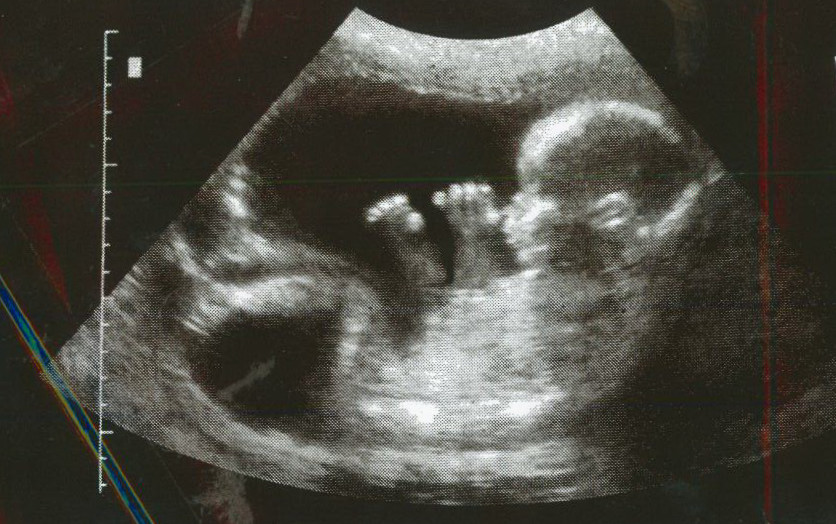
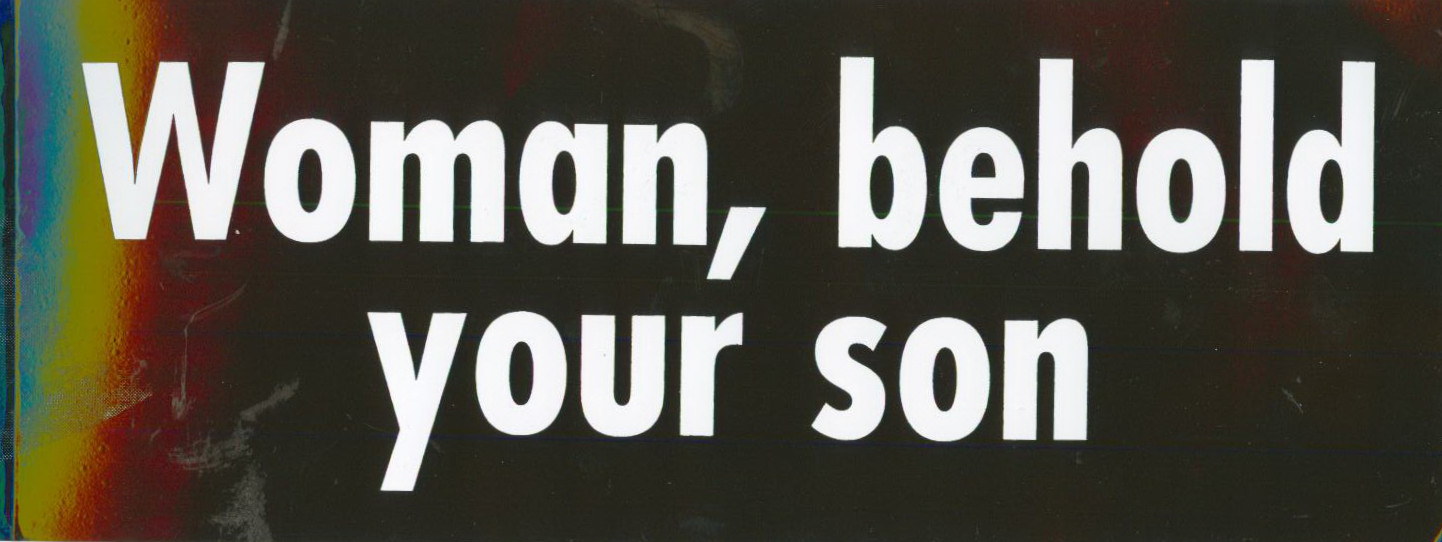
“Like the Church, Mary too had to live her motherhood amid suffering: ‘This child is set … for a sign that is spoken against – and a sword will pierce through your own soul also – that thoughts out of many hearts may be revealed’ (Lk 2:34-35). The words which Simeon addresses to Mary at the very beginning of the Saviour’s earthly life sum up and prefigure the rejection of Jesus, and with him of Mary, a rejection which will reach its culmination on Calvary.
‘Standing by the cross of Jesus’ (Jn 19:25), Mary shares in the gift which the Son makes of himself: she offers Jesus, gives him over, and begets him to the end for our sake.
The ‘yes’ spoken on the day of the Annunciation reaches full maturity on the day of the Cross, when the time comes for Mary to receive and beget as her children all those who become disciples, pouring out upon them the saving love of her Son: ‘When Jesus saw his mother, and the disciple whom he loved standing near, he said to his mother, Woman, behold, your son!’ (Jn 19:26).” Evangelium Vitae, #103
Mary was called in a special way and her heart was pierced in a way that we can never fathom. Among women, only she had a heart anointed, for her mission to love all as her children.
But don’t you also feel a sword pierce your heart when you look upon these innocent children who are aborted? Don’t you sense Christ calling you to love these little ones in a special way?
Note: First Eve was called ‘Woman’ (Gen 2:23 and also in Chapter 3). John the Evangelist records Jesus calling His mother by the title ‘Woman’ two times: during the marriage feast at Cana (Jn 2:4) and during His crucifixion (Jn 19:26). John also refers to Mary by the title ‘Woman’ (the ‘Second Eve’ as the Fathers of the Church also called her) many times in Chapter 12 of the Book of Revelations.
P.S. I obtained the bumper sticker featured above from Kara Vereault when I was at the March for Life January 22, 2008. She and Kim Achorn of Shepherd’s Path had the bumper stickers made up.
Filed under: The Incarnation
Then God said, “Let us make man in our image, after our likeness…” (Genesis 1:26)
I find this verse in the Bible very meaningful. As a teenager (as many teenagers do) I went through a period of questioning not only my faith but life itself. The road that I traveled to Christ was the realization that the human person has an intrinsic greatness within. Because of that sense of man’s greatness I never, even then, thought that abortion was right. Here are three quotes that amplify the meaning of Genesis and this greatness that God has given to each person.
________________________________________
“…. as if, in a special way, He drew man from the mystery of His own Being. That is understandable, because it is not a question just of Being, but of the Image. The image must “reflect”, it must, in a certain way, almost reproduce “the substance” of its Prototype. The Creator says, furthermore, “after our likeness”. It is clear that it must not be understood as a “portrait”, but as a living being, who will live a life similar to that of God.” General Audience Dec. 6, 1978, John Paul II
“But the fact that man is made in the pattern of the Son and that Christ’s image is woven into his very being has certain consequences: in the merely natural effort to be more fully himself, to be all that he should be, he collides, so to speak, with Christ, not knowing what he is in contact with, but stirred, all the same, by shadowings of that unrealized Presence.” A Rocking Horse Catholic by Caryll Houselander
“All the ages of Christ on earth must be continually manifest in men: infancy, babyhood, boyhood, adolescence, manhood; also the life in the womb, the three days dead, the risen life…”
The Reed of God by Caryll Houselander
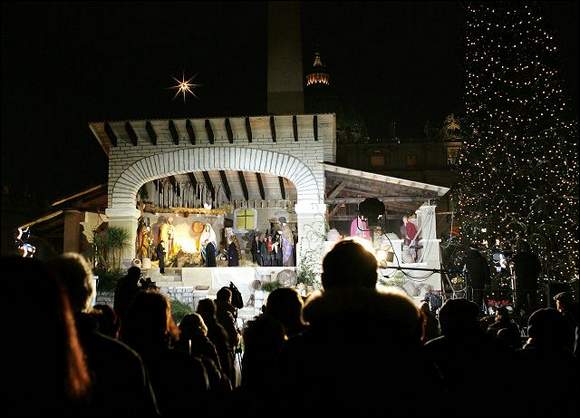
This year the Vatican’s Nativity scene is in a huge house-like structure. Normally, the scene of Jesus’ birth is depicted in a traditional manger setting, but this time it’s a recreation of Joseph’s home in Nazareth. Perhaps by doing this the Holy Father wants to emphasize home and family.
Today, Sunday December 30 is the feast day of the Holy Family
“….I bow my knees before the Father, from whom every family in heaven and on earth is named….” Ephesians 3:14-15
“If the Son of God had not come into our world we would not understand the Fatherhood of God, and if the Son of God had not been born into a family and lived so many years within His family we would not comprehend the full meaning of family life nor the compelling God‑given mission facing every family.
Adam and Eve, Mary and Joseph, indeed every married couple will together create a family culture, establish and develop its family “name”: identity, unique defining characteristics, emotional and intellectual traits, its own spirituality in relation to the Father in heaven. Discovering and building one’s family identity is a work in progress best attempted with a healthy focus on God, faith and devotion.
The First Christian Parents
Their family “name” or identity is hidden and will have to be discovered by a married couple, just as the unborn child too is hidden, and needs discovery by the parents. For around the child the family grows to become what it was destined to be. In the case of Joseph and Mary, their family was centered around Jesus Whom they learned to discover and love, day by day, even before He was born.
Many diverse consequences come in the wake of the revolutionary Incarnation of God ‑ a revolution of mercy. One of the major benefits was to the family as an institution, which was radically overhauled and strengthened from within, when this Divine Child entered into it. Redemption begins within the hidden recesses of Mary’s womb. Redemption begins in the family.”
From: Unborn Jesus Our Hope

Our Lady of the New Advent
by Fr. William McNichols
On December 2, the season of Advent begins. I think as Christians we have to begin to think of a way to circumvent the madness of the ‘Christmas season’ and return to the quiet, prayerful and waiting season of Advent.
In the recent issue of First Things Magazine, Joseph Bottoms has an article entitled The End of Advent. It begins:
“Christmas had devoured Advent, gobbled it up with the turkey giblets and the goblets of the season. Every secularized holiday tends to loose the context it had in the liturgical year…Easter has hopped across Lent, Halloween has frightened away All Saints, and New Years has drunk up Epiphany. Still the disappearance of Advent seems seems especially disturbing…”
I think if we are to live Advent well, it requires careful planning. To have a strategy – even now it’s not too late to try and get some of the busy work of Christmas out of the way before Advent begins. As we do this, we can thoughtfully plan to live a prayerful Advent season so that Christmas will be a reliving of the joyful birth of our Savior.
In his blog, Abbey-Roads2, Terry Nelson offers a great suggestion – a novena to the Infant Jesus that he prays each month starting on the 17 and ending on the 25th. He prepares for Christmas all year. WOW!
At ‘UNBORN WORD of the day’, we will be offering prayerful short Advent meditations starting on December 2 till Christmas. Beginning with the waiting of the chosen people for the Messiah, we will then follow the Unborn Christ Child’s time of waiting from conception to birth. This will be our small contribution to help put Advent back in Christmas.
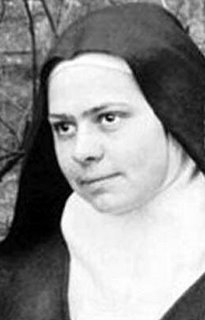
Today, November 8 is the feast day of Blessed Elizabeth of the Trinity (1880-1906). She has been called the Saint of the Divine Indwelling. In 1901 she entered the Carmelite order, receiving the name “Sister Elizabeth of the Trinity.” In his book Redeemer in the Womb, John Saward, points to her as one of three woman in the 20th century who emphasize the importance of Jesus’ life in the womb. (The other two are Caryll Houselander and Adrienne von Speyr.) Another lesser known woman who wrote extensively on this topic was Mother St. Paul.
Here is a quote from Blessed Elizabeth:
“It seems to me that the attitude of the Virgin during the months between the Annunciation and the Nativity is the model for interior souls, for those whom God has chosen to live inwardly, in the depths of the unfathomable abyss.” From Le Ciel dans la foi.
She elaborates in a letter to her sister, Guite (Oeuvres completes):
“Think what must have been going on in the Virgin’s soul after the Incarnation, when she possessed within her the Word incarnate, the Gift of God…In what silence, what recollection, what adoration she must have buried herself in the depths of her soul to embrace this God whose Mother she was. My little Guite, he is in us. O let us stay close to him in this silence, with this love, of the Virgin. This is the way to spend Advent, isn’t it?”
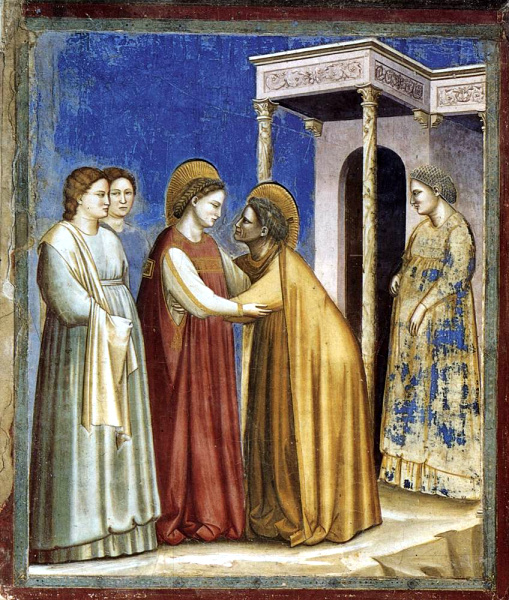
Yesterday, November 5 was the feast day of St. Elizabeth and Zachery, the parents of St. John the Baptist. Yesterday, the focus of our blog was on Zechariah, (today we will concentrate on Elizabeth). The account of Mary’s Visitation to Elizabeth (and her unborn baby John) and Zechariah, is found in Luke 1:38-57.
- Humble Elizabeth has an important role in this encounter; Fulton Sheen spoke of it in this way: “One of the most beautiful moments in history was that when pregnancy met pregnancy ‑ when child bearers became the first heralds of the King of Kings.” (The Worlds First Love)
- Elizabeth seems to have been awestruck by the immediate revelation she received at this moment. Some people would be similarly overwhelmed should a famous celebrity or world leader walk in their front door, but for Elizabeth there could have been nothing more momentous than the pregnant mother of the Messiah – carrying Him within her – entering her home. The Holy Spirit imparts to Elizabeth the gifts of knowledge and understanding, and she, who is full of good will and faith, is enlightened as to the meaning of what is occurring (Lk 1:42).
- Archbishop Goodier notes that “… throughout His life the one desire of Jesus was that He should be discovered; that He should be discovered, and recognized, owned. For every step made in that discovery He was grateful; no man made it but met with reward overflowing. The one thread of interest running through the whole drama of His life is the growth of this discovery.”( The Public Life of Our Lord Jesus Christ, Vol. One) Unborn John and his mother Elizabeth share in this first discovery together, as if to remind us all that the first place Jesus should be discovered is in the family.
- Consider the astounding words of Elizabeth which introduce, for the first time, two titles: the title “Lord” to describe unborn baby Jesus, and the title “Mother of (the) Lord” to describe Mary.
- For Elizabeth this was a bittersweet time. Her husband was still distressed at having doubted Gabriel: as his wife, she was yoked to his troubled thoughts and sad countenance. With whom could she share her joy? To whom could she vent her anxieties about her son’s childhood, and from whom could she receive encouraging words in return? Who could understand her situation and nurture hope in her new mother’s heart? And who could lift the spirits of her husband? Enter Mary: her young faithful heart near exploding with the Holy Spirit and the exuberant joy of miraculous motherhood and intimate knowledge of the Messianic mission. Mary’s companionship and support were a great blessing for Elizabeth.
- But more important than Mary, the unborn Lord arrives with His divine companionship. Now Elizabeth could pour out her heart…..and then listen with a renewed heart as the Word spoke to her. Conversations had been banished from her house and silence had been a constant companion, but now the very Word of God Himself came in through the front door and dwelt in the center of her home. Condensed from Unborn Jesus Our Hope.
 UNBORN WORD of the day