


Respect Life Sunday – October 3, 2010
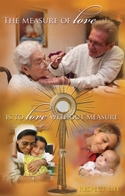
Topics addressed in this year’s Respect Life Program reflect a diversity of pro-life concerns (we have added links to some excellent pamphlets/bulletin inserts from the Respect Life Program):
- the death penalty and Divine Mercy
- end-of-life care Caring for Each Other, Even Unto Death by Marie Hillard
- infertility treatments in line with Church teaching Hope for Married Couples Who Want to Have a Child by John T. Bruchalski, MD, FACOG
- sexual trafficking
- population control Make Room for People by Steven W. Mosher
- depression and suicide among youth
- the promise of pro-life youth The Promise of Pro-Life Youth by Megan Breen and Samuel Vasquez
Here are two links to the USCCB website that give complete details on the Respect Life Program.
Click here for an overview of the program and here for materials that can be downloaded.
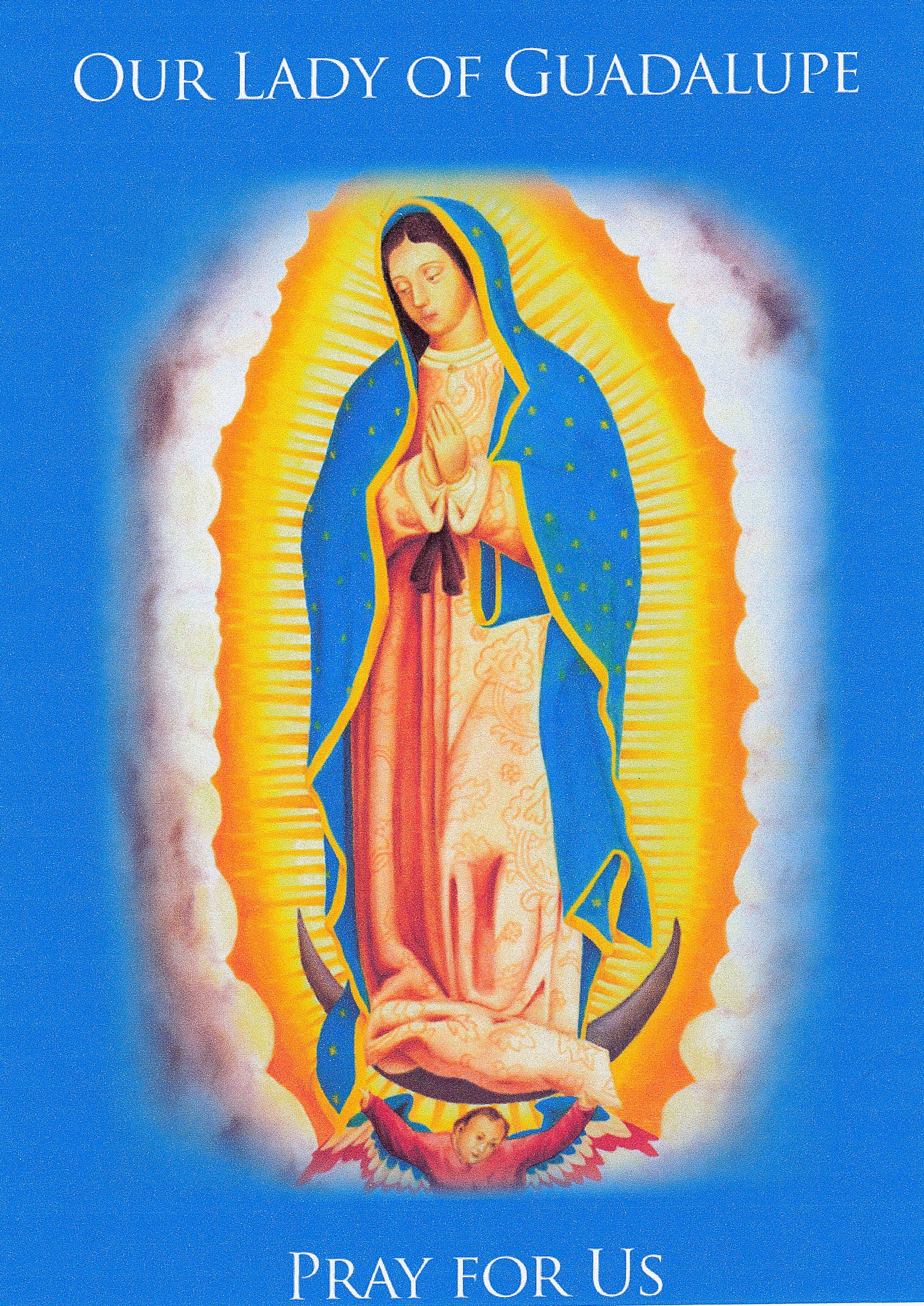
What I find especially interesting about this year’s program is the emphasis on Our Lady of Guadalupe in the 2010 – 2011 Respect Life Program Liturgy Guide.
Page 10 of the Liturgy Guide is about the Miraculous Apparitions of Our Lady of Guadalupe. The following is a quote from this article:
“Our Lady of Guadalupe has been honored by twenty-five popes. She has been formally declared Patroness and Mother of the Americas. Informally, she is honored as Patroness of Unborn Children because she appeared to Juan Diego as a pregnant woman and, in the seven years after the apparitions, approximately eight million Aztec people converted to Catholicism, and abandoned a culture of death that had practiced human sacrifice, including infant sacrifice.”
There is also a beautiful nine day Novena to Our Lady of Guadalupe in the Liturgy Guide. Day 3 has a short reflection on Our Lady’s Pregnancy.
Day Three
Mother of God, your ribboned sash identified you as a pregnant woman, a woman who bore the Christ Child to a world in darkness and who through two millennia has borne the light and love of Christ to a world that has largely rejected Him. May the love of your Son awaken a hymn of thanksgiving and praise in all pregnant mothers,as happened long ago in the home of Elizabeth and Zechariah.
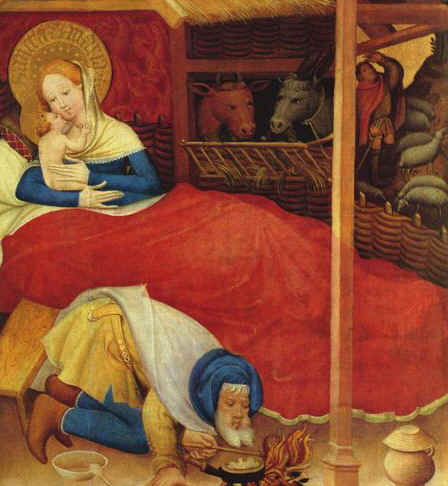
Birth of Christ: St. Denis Basilica, Paris
“I came to cast fire upon the earth; and would that it were already kindled!” Luke 12:49
Filed under: Unborn Jesus
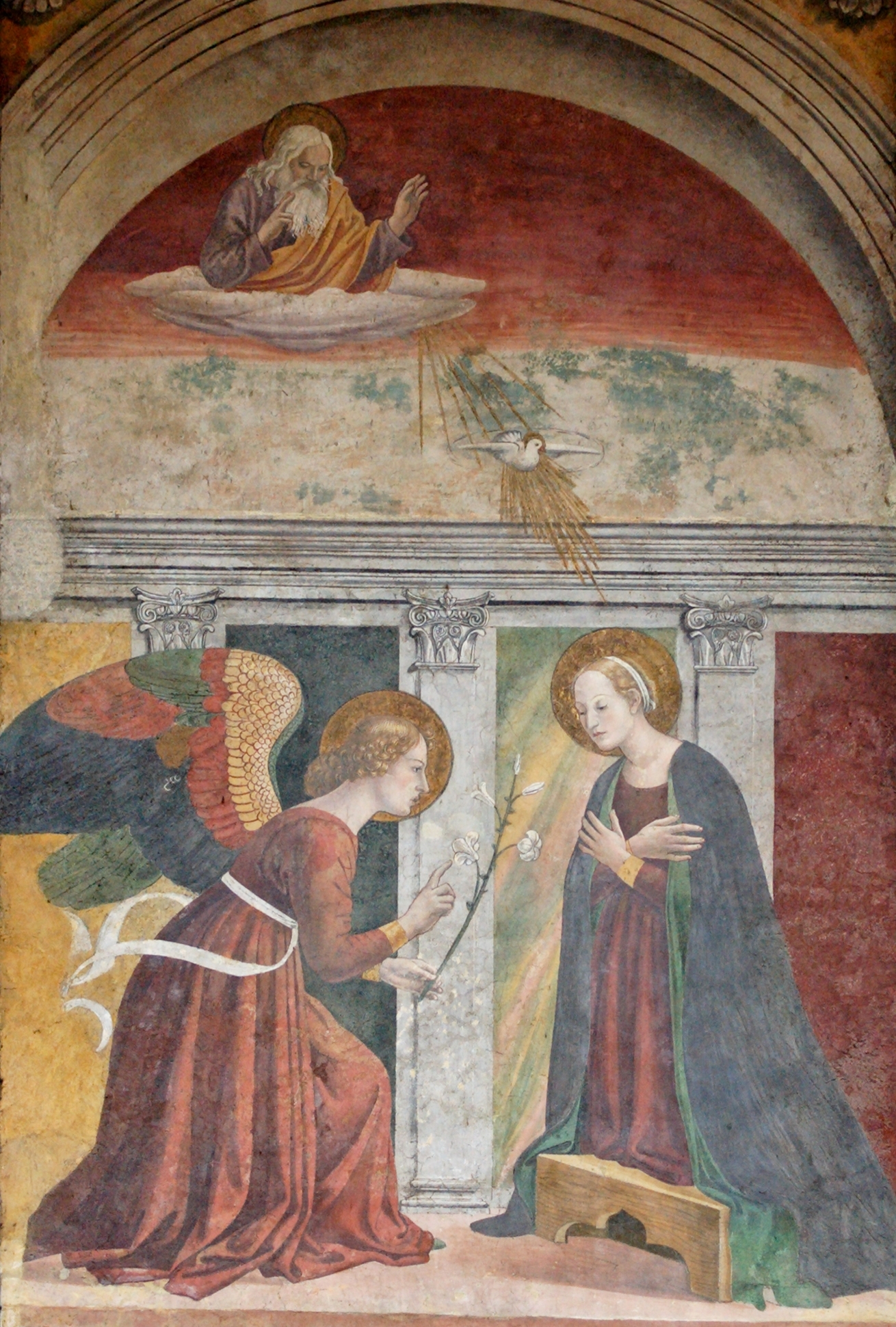
The following is a quote from Pope John Paul II.
“The first part of the Hail Mary, drawn from the words spoken to Mary by the Angel Gabriel and by Saint Elizabeth, is a contemplation in adoration of the mystery accomplished in the Virgin of Nazareth.
These words express, so to speak, the wonder of heaven and earth; they could be said to give us a glimpse of God’s own wonderment as he contemplates his “masterpiece” – the Incarnation of the Son in the womb of the Virgin Mary.
If we recall how, in the Book of Genesis, God “saw all that he had made” (Gen 1:31), we can find here an echo of that “pathos with which God, at the dawn of creation, looked upon the work of his hands”.
The repetition of the Hail Mary in the Rosary gives us a share in God’s own wonder and pleasure: in jubilant amazement we acknowledge the greatest miracle of history. “
Apostolic Letter of John Paul II, Rosarium Virginis Mariae , # 33
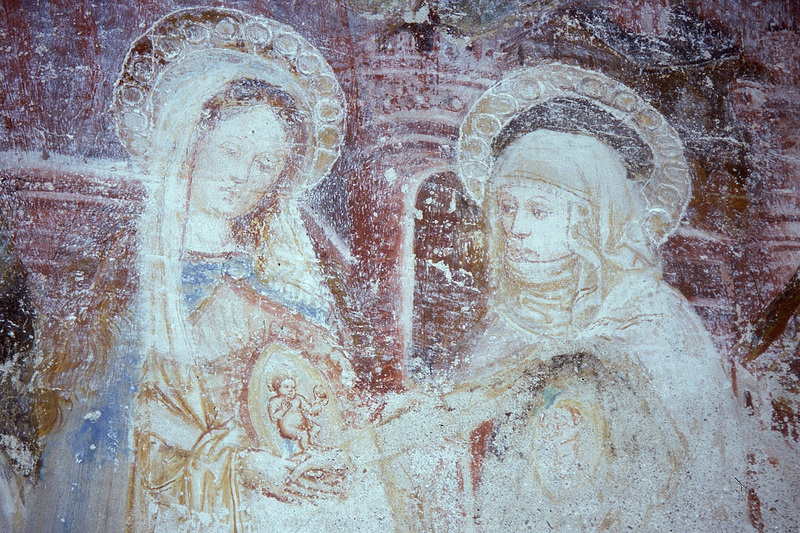
The Church celebrates three New Testament era pregnancies in her ancient Church calendar:
Mary: Her Conception – December 8th (The Immaculate Conception of Mary) Her Nativity – September 8th (nine months later)
John the Baptist: (His Gestation – May 31st; The Visitation) His Birth – June 24th
Jesus: His Conception – March 25th (The Annunciation) (His Gestation – May 31st; The Visitation) His Nativity – December 25th (Christmas; nine months later)
The dates are in large part symbolic, though marking actual historical events. We include here the feast day of the Visitation (twice) inasmuch as this feast day encapsulates many profound aspects of these two pregnancies; the two mothers and the two unborn/preborn babies. The Church even has two seasons honoring the pregnancy and birth of Jesus; Advent and Christmastide. Then, to top the whole pregnancy perspective off, there is even a feast day to celebrate ‘Mary Mother of God’ (January 1st). Taken together, these are Culture of Life days of celebration! (Note: Joseph’s fatherhood is also celebrated March 19th and Feast of the Holy Family; Sunday after Christmas.)
Capturing the sentiment in his Encyclical Letter on the Holy Spirit, Pope John Paul the Great says: “The conception and birth of Jesus Christ are in fact the greatest work accomplished by the Holy Spirit in the history of creation and salvation: the supreme grace – ‘the grace of union,’ source of every other grace, as St. Thomas explains.”
And yet, amidst all of this wondrous celebration and joy, there is the little matter of December 28th – the feast of The Holy Innocents….during which, in our modern time of Herodian vices run amok, we sadly recall the Gospel story of infant male massacre along with our present day horror of unborn male and female massacre.
In the spirit of the hidden (unborn) Infancy Gospel, in harmony with the above teaching of John Paul the Great, in the legacy of the Gospel of Life Encyclical, and in solidarity with all unborn children who have died or are at risk, we propose one more feast day relating to the pregnancy of Mary: a feast day of The Unborn Christ Child!
A Feast Day acknowledging boldly that Jesus Christ was a beautiful unborn baby – like other unborn babies – that the Unborn Christ Child is in complete solidarity with all unborn children as He fulfills the Will of God within the womb of His Mother, and that God loves all unborn children. A feast day of Hope and Expectation, honoring pregnant Mothers who, like Mary, strive to follow the Will of God with heroic virtue.
Let us know if you agree, and please share this idea with others!
 UNBORN WORD of the day